


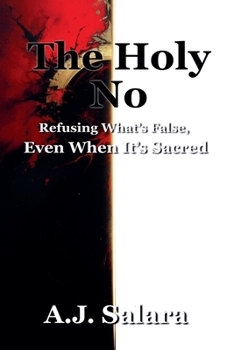
The Holy No Refusing What's False, Even When It's Sacred

In a culture where spirituality is equated with endless openness, forced forgiveness, and polished emotional expression, The Holy No offers something profoundly different: the sacred permission to stop.
This is not a book about rebellion. It's a book about reverence-the kind that arises when we say no, not to life, but to what distorts it. A no to rituals that no longer serve. A no to spaces that require self-abandonment to belong. A no to the inner voice demanding you keep giving, stretching, processing-even when it costs your clarity.
With lyrical precision, A.J. Salara examines the quiet burden of spiritual performance-when vulnerability becomes obligation, when compassion is weaponized, and when silence is misread as surrender. He doesn't offer techniques or timelines. He names the exhaustion, honors the resistance, and gives language to the ache of those who've outgrown the performance of growth but still long for what's real.
What This Book Offers
The Holy No unfolds across 21 chapters, each naming a different pressure point where spiritual ideals begin to override inner truth. These are the moments when growth becomes disguise, when kindness becomes currency, when truth becomes quiet just to keep the peace.
Rather than offering a method for transformation, each chapter invites the reader inward-toward reflection, discernment, and emotional self-trust. With every page, the message is simple: you don't need to fix what isn't broken. You don't need to explain your distance. You don't need to keep making peace with what keeps costing you presence.
Each chapter ends not with advice, but with spacious insight-crafted to leave you grounded in your own authority rather than reaching for someone else's framework.
Core Themes Include:
Who This Book Is For
It's for anyone who's felt guilt for setting a boundary, or been praised for their openness but punished for their refusal.
Above all, it's for those ready to stop performing their pain-and start honoring it as truth. How the Book Is Structured
The book begins by unpacking how openness became a spiritual virtue-but rarely a protected choice. From there, it explores deeper patterns: emotional overexposure, the spiritualization of guilt, the hidden exhaustion of "always growing."
Each chapter names what others tend to spiritualize:
The grief of pretending to be healedThe fatigue of constant availabilityThe clarity of not always sharingThe peace of saying no without guiltRather than resolve these tensions, the book holds space for them. It doesn't build toward transformation. It guides you back to inner alignment-toward a slow return to self.
Why It Matters Now
If you're ready to step out of performance and into self-trust, this is your beginning.
Let your boundaries speak. Let your silence count. Let your no be enough.
Related Subjects
Religion Religion & Spirituality Self Help Self-Help Self-Help & Psychology SpiritualityCustomer Reviews
ThriftBooks ® and the ThriftBooks ® logo are registered trademarks of Thrift Books Global, LLC
