


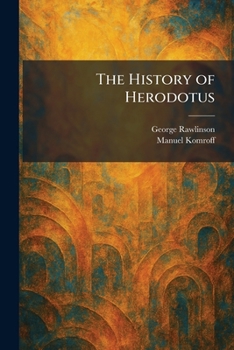
The History of Herodotus

"The History of Herodotus" stands as a foundational pillar of Western historiography, earning its author the title of the "Father of History." This comprehensive narrative traces the rise of the Persian Empire and its inevitable collision with the Greek city-states during the Greco-Persian Wars. Beyond a mere chronicle of military conflict, the work serves as a vast repository of ancient knowledge, blending geography, ethnography, and folklore into a singular epic.
Herodotus explores the diverse cultures of the Mediterranean and Near East, offering detailed observations on the customs of the Egyptians, Scythians, and Persians. His accounts of legendary figures and pivotal battles-including Marathon, Thermopylae, and Salamis-provide invaluable insights into the political and social landscape of the fifth century BCE. This translation by George Rawlinson and edited by Manuel Komroff captures the spirit of the original text, preserving the inquisitive and often conversational tone that makes Herodotus's writing so enduring.
A masterpiece of classical literature, "The History of Herodotus" remains essential reading for anyone seeking to understand the origins of historical inquiry and the complex relationships that shaped the ancient world. It is both a rigorous attempt to record the great and wonderful deeds of men and a captivating journey through the myths and realities of antiquity.
This work has been selected by scholars as being culturally important, and is part of the knowledge base of civilization as we know it. This work was reproduced from the original artifact, and remains as true to the original work as possible. Therefore, you may see the original copyright references, library stamps (as most of these works have been housed in our most important libraries around the world), and other notations in the work.
This work is in the public domain in the United States of America, and possibly other nations. Within the United States, you may freely copy and distribute this work, as no entity (individual or corporate) has a copyright on the body of the work.
As a reproduction of a historical artifact, this work may contain missing or blurred pages, poor pictures, errant marks, etc. Scholars believe, and we concur, that this work is important enough to be preserved, reproduced, and made generally available to the public. We appreciate your support of the preservation process, and thank you for being an important part of keeping this knowledge alive and relevant.
Customer Reviews
ThriftBooks ® and the ThriftBooks ® logo are registered trademarks of Thrift Books Global, LLC
