


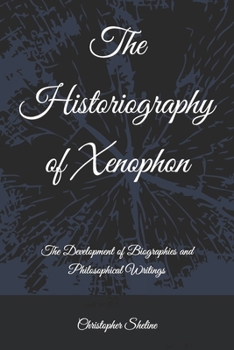
The Historiography of Xenophon: The Development of Biographies and Philosophical Writings
No Customer Reviews

To ancient and classical scholars, the writings and adventures of Xenophon remain a staple in the development of historical writing. Yet, unlike most Greek authors, Xenophon's ambitions produced a profound and everlasting turning point in the very essence of historiography. This is because those very writings and adventures appeared as one of the first forms of autobiographical historical narratives. Where Herodotus was the father of history, and Thucydides the father of military history, Xenophon was the father of philosophical autobiographies that provided first hand insight into history as it developed. Xenophon's early life exhibited various influences that catered to the development of his methodology, particularly those during the Peloponnesian War. Xenophon's general impression of the Spartan versus Athenian opposition in addition to his close relationship to the famed philosopher Socrates compelled him to produce philosophical personal narratives that focused on war and politics. This theme is consistent throughout his many books, including the famed Hellenica and Anabasis. While the idea of objective versus subjective writing remains an issue, these findings showed that Xenophon was an important historian because he wrote about life from a personal yet academic view, integrated philosophy into historiography, and thus altered historical writing and political thinking simultaneously.
Format:Paperback
Language:English
ISBN:B09Y2BFSCS
ISBN13:9798806637353
Release Date:April 2022
Publisher:Independently Published
Length:40 Pages
Weight:0.15 lbs.
Dimensions:0.1" x 6.0" x 9.0"
Related Subjects
HistoryCustomer Reviews
0 rating
Copyright © 2026 Thriftbooks.com Terms of Use
| Privacy Policy | Do Not
Sell/Share My Personal Information | Cookie Policy | Cookie Preferences | Accessibility Statement
ThriftBooks® and the ThriftBooks® logo are registered trademarks of Thrift Books Global, LLC
ThriftBooks® and the ThriftBooks® logo are registered trademarks of Thrift Books Global, LLC
