



Select Format
Select Condition 
Book Overview
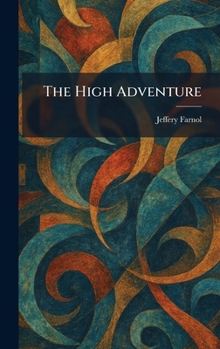
"The High Adventure" is a quintessential Regency-era romance and adventure novel from the celebrated author Jeffery Farnol. Known for his vivid depictions of historical England, Farnol crafts a story rich in atmosphere, chivalry, and high-stakes intrigue. The narrative follows a spirited protagonist as he navigates the winding roads of the English countryside, encountering a colorful cast of characters ranging from mysterious strangers to formidable villains.
Central to the plot is a quest for justice and the reclamation of a stolen heritage. As the hero unravels a web of family secrets and deception, he must rely on his wit and courage to overcome the obstacles in his path. The book perfectly captures the spirit of the swashbuckling genre, blending heartfelt romance with moments of pulse-pounding action and suspense.
Fans of classic historical fiction will appreciate Farnol's masterful use of period dialogue and his ability to transport readers to a bygone era of highwaymen and manor houses. "The High Adventure" remains a testament to the enduring appeal of the hero's journey and the timeless charm of Regency storytelling.
This work has been selected by scholars as being culturally important, and is part of the knowledge base of civilization as we know it. This work was reproduced from the original artifact, and remains as true to the original work as possible. Therefore, you may see the original copyright references, library stamps (as most of these works have been housed in our most important libraries around the world), and other notations in the work.
This work is in the public domain in the United States of America, and possibly other nations. Within the United States, you may freely copy and distribute this work, as no entity (individual or corporate) has a copyright on the body of the work.
As a reproduction of a historical artifact, this work may contain missing or blurred pages, poor pictures, errant marks, etc. Scholars believe, and we concur, that this work is important enough to be preserved, reproduced, and made generally available to the public. We appreciate your support of the preservation process, and thank you for being an important part of keeping this knowledge alive and relevant.
Customer Reviews
ThriftBooks ® and the ThriftBooks ® logo are registered trademarks of Thrift Books Global, LLC
