


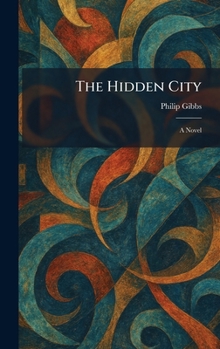
The Hidden City

"The Hidden City: A Novel" is a profound exploration of the human psyche and the intricate social fabric of post-World War I London. Seen through the lens of a young, idealistic doctor named John Jevons, the story follows his journey as he establishes a medical practice in the heart of the bustling metropolis. Jevons soon discovers that behind the closed doors of London's townhouses and tenements lie "hidden cities"-the private worlds of his patients, filled with unspoken anxieties, suppressed memories, and the lingering trauma of the Great War.
Written with the keen insight of an observant journalist and the sensitivity of a gifted novelist, Philip Gibbs offers a panoramic view of British society during a period of significant cultural and psychological shift. The work delves into themes of mental health, class distinctions, and the search for connection in an increasingly fragmented world. "The Hidden City: A Novel" is a masterclass in social realism, providing a compassionate and detailed look at the internal and external realities of life in 1920s England. This narrative remains a vital piece of literary history for those fascinated by the complexities of the human condition and the transformative power of empathy.
This work has been selected by scholars as being culturally important, and is part of the knowledge base of civilization as we know it. This work was reproduced from the original artifact, and remains as true to the original work as possible. Therefore, you may see the original copyright references, library stamps (as most of these works have been housed in our most important libraries around the world), and other notations in the work.
This work is in the public domain in the United States of America, and possibly other nations. Within the United States, you may freely copy and distribute this work, as no entity (individual or corporate) has a copyright on the body of the work.
As a reproduction of a historical artifact, this work may contain missing or blurred pages, poor pictures, errant marks, etc. Scholars believe, and we concur, that this work is important enough to be preserved, reproduced, and made generally available to the public. We appreciate your support of the preservation process, and thank you for being an important part of keeping this knowledge alive and relevant.
Customer Reviews
ThriftBooks ® and the ThriftBooks ® logo are registered trademarks of Thrift Books Global, LLC
