


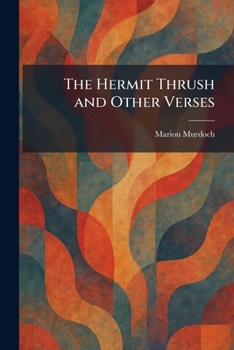
The Hermit Thrush and Other Verses

"The Hermit Thrush and Other Verses" is a poignant collection of lyric poetry that captures the delicate interplay between the natural world and the human spirit. Written by Marion Murdoch, this volume reflects the gentle, introspective style of early twentieth-century American verse. The title poem, "The Hermit Thrush," serves as a centerpiece for a series of meditations on nature's beauty, using the evocative song of the bird as a metaphor for solitude, resilience, and spiritual connection.
Throughout the collection, Murdoch explores themes of faith, loss, and the quiet wonders of the changing seasons. Her mastery of rhythm and form allows these verses to resonate with a timeless quality, offering readers a space for reflection and solace. From vivid descriptions of the landscape to deeply personal odes, the poems within this work demonstrate a profound appreciation for the ephemeral moments of life. This collection is an evocative example of devotional and nature-focused poetry, showcasing an ability to find universal meaning in the whispers of the wilderness and the stillness of the heart.
This work has been selected by scholars as being culturally important, and is part of the knowledge base of civilization as we know it. This work was reproduced from the original artifact, and remains as true to the original work as possible. Therefore, you may see the original copyright references, library stamps (as most of these works have been housed in our most important libraries around the world), and other notations in the work.
This work is in the public domain in the United States of America, and possibly other nations. Within the United States, you may freely copy and distribute this work, as no entity (individual or corporate) has a copyright on the body of the work.
As a reproduction of a historical artifact, this work may contain missing or blurred pages, poor pictures, errant marks, etc. Scholars believe, and we concur, that this work is important enough to be preserved, reproduced, and made generally available to the public. We appreciate your support of the preservation process, and thank you for being an important part of keeping this knowledge alive and relevant.
Related Subjects
PoetryCustomer Reviews
ThriftBooks ® and the ThriftBooks ® logo are registered trademarks of Thrift Books Global, LLC
