


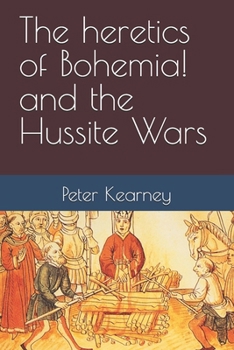
The heretics of Bohemia! and the Hussite Wars

The Heretics of Bohemia and the Hussite Wars
This comprehensive history examines the remarkable Hussite movement (1415-1436), which emerged from the execution of Czech reformer Jan Hus and became Europe's first successful Protestant revolution-a full century before Martin Luther.
Beginning with the crisis of papal authority during the Western Schism, the book traces how Czech grievances against clerical corruption, German domination, and religious oppression coalesced around Hus's martyrdom. The Four Articles of Prague became a revolutionary manifesto demanding communion in both kinds, vernacular preaching, elimination of clerical wealth, and equal justice-principles that unified nobles, townspeople, and peasants under the symbolic chalice.
Under military genius Jan Zizka, Hussite forces revolutionized medieval warfare through innovative wagon-fort tactics and early gunpowder weapons, repeatedly defeating European crusading armies. Their "Beautiful Rides" projected power across Central Europe, demonstrating that peasant armies could triumph over professional knights through superior organization and technology.
However, internal divisions between moderate Utraquists and radical Taborites ultimately led to civil war. The Battle of Lipany (1434) destroyed Taborite radicalism, enabling the Compacta of Prague-a groundbreaking compromise granting limited religious autonomy within the Catholic Church.
Though eventually suppressed by Habsburg Counter-Reformation, the Hussite legacy profoundly influenced the Protestant Reformation, democratic movements, military innovation, and Czech national identity. Their pioneering of religious freedom, popular sovereignty, and resistance to corrupt authority established principles that continue shaping modern democratic civilization.
Related Subjects
HistoryCustomer Reviews
ThriftBooks® and the ThriftBooks® logo are registered trademarks of Thrift Books Global, LLC
