


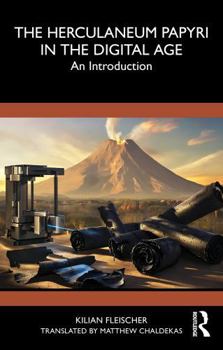
The Herculaneum Papyri in the Digital Age: An Introduction

This volume offers the first English introduction to the Herculaneum papyri, the only surviving library from antiquity, and to the intriguing advances being made in reading these texts through cutting edge imaging techniques.
The library of the Villa dei Papiri in Herculaneum has been a source of fascination since its discovery in the eighteenth century. Centuries of attempts to open its carbonised scrolls have yielded significant innovations, yet they have also destroyed texts when these fragile objects resisted unrolling. Recent years, however, have brought non-invasive digital technologies that promise to unroll the remaining scrolls virtually and to recover hundreds of lost ancient works. This book surveys the latest technical developments, including multispectral and hyperspectral imaging, virtual unwrapping, and the ongoing Vesuvius Challenge. It also provides an accessible introduction to papyrological and philological method, showing how fragmentary texts are deciphered and reconstructed. A detailed case study drawn from the author's own research then demonstrates how new technologies and rigorous textual analysis combine to reshape our understanding of ancient philosophy and history.
Concise and engaging, this book offers a compelling introduction to the Herculaneum papyri for students and scholars of papyrology, classics, archaeology, and ancient philosophy. It will also prove a valuable resource for researchers in the digital humanities and computer science interested in applying AI to cultural heritage.
Customer Reviews
ThriftBooks ® and the ThriftBooks ® logo are registered trademarks of Thrift Books Global, LLC
