


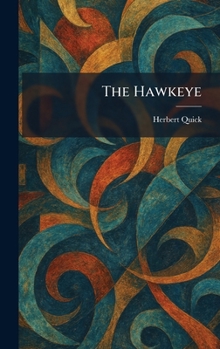

"The Hawkeye" is a seminal work of historical fiction that vividly captures the transformation of the American frontier during the mid-to-late 19th century. Set in the fertile prairies of Iowa, the novel follows the life of Fremont McConkey, a young man coming of age amidst the rapid settlement and burgeoning political landscape of the Hawkeye State. As a significant entry in Herbert Quick's celebrated Iowa trilogy, the story shifts focus from the initial struggle of the pioneers to the complex social and political evolution of a growing society.
The narrative masterfully blends personal ambition with the broader currents of American history, exploring themes of journalistic integrity, grassroots politics, and the enduring connection between the land and its people. Through McConkey's eyes, readers witness the transition from rugged wilderness to organized communities, grappling with the tensions between idealism and corruption. Rich in atmospheric detail and historical authenticity, "The Hawkeye" remains a poignant exploration of the American spirit and a vital chronicle of the Midwestern experience. This work stands as a testament to the grit and determination of those who shaped the heartland, offering a compelling look at the foundations of modern America.
This work has been selected by scholars as being culturally important, and is part of the knowledge base of civilization as we know it. This work was reproduced from the original artifact, and remains as true to the original work as possible. Therefore, you may see the original copyright references, library stamps (as most of these works have been housed in our most important libraries around the world), and other notations in the work.
This work is in the public domain in the United States of America, and possibly other nations. Within the United States, you may freely copy and distribute this work, as no entity (individual or corporate) has a copyright on the body of the work.
As a reproduction of a historical artifact, this work may contain missing or blurred pages, poor pictures, errant marks, etc. Scholars believe, and we concur, that this work is important enough to be preserved, reproduced, and made generally available to the public. We appreciate your support of the preservation process, and thank you for being an important part of keeping this knowledge alive and relevant.
Customer Reviews
ThriftBooks ® and the ThriftBooks ® logo are registered trademarks of Thrift Books Global, LLC
