


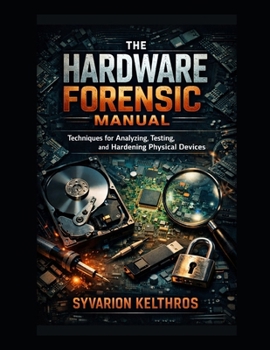
The Hardware Forensic Manual: Techniques for Analyzing, Testing, and Hardening Physical Devices
No Customer Reviews

Uncover Hidden Vulnerabilities - A Practical Guide to Hardware Forensics and Device Security: Most security conversations focus on software. But some of the most serious compromises start much deeper-at the hardware level.Malicious components introduced during manufacturing.Firmware backdoors that survive system reinstalls.Physical tampering that leaves no obvious digital evidence.
While organizations invest heavily in firewalls and endpoint protection, the hardware those defenses rely on often goes unexamined. The Hardware Forensic Manual is a practical, methodical guide to analyzing, testing, and securing physical devices against attacks that software defenses simply cannot detect. Why Hardware Security Can't Be an Afterthought Modern attackers increasingly target hardware because it offers long-term access, stealth, and persistence. Once hardware is compromised, operating systems, encryption, and security software can be rendered meaningless. These threats aren't hypothetical. They include: Supply-chain compromises by nation-statesInsider threats involving physical device accessMalicious firmware embedded in legitimate componentsCounterfeit or altered hardware entering critical systems
Hardware forensics is no longer a niche skill. It's a necessary capability for any organization that takes security seriously. This manual provides the knowledge and procedures needed to examine devices at the physical level, verify their integrity, detect tampering, and implement meaningful hardening measures. What You'll Learn Inside The Hardware Forensic Manual, you'll gain a structured understanding of hardware security, including: Core Hardware Architecture How modern devices are built, how components interact, and where vulnerabilities typically exist. Hardware Forensic Methodology Systematic approaches to examining circuit boards, chips, firmware, and embedded systems. Tampering Detection Identifying physical manipulation-from subtle supply-chain interference to direct device access. Firmware Analysis Extracting and validating firmware across BIOS, UEFI, embedded controllers, and peripherals. Side-Channel Attacks Understanding power, electromagnetic, and timing-based leakage-and how attackers exploit it. Supply-Chain Security Verifying hardware provenance, detecting counterfeit components, and maintaining chain of custody. Lab Setup and Tools Building a functional hardware forensics lab, from essential instruments to advanced analysis equipment. Chip-Level Examination Techniques such as decapsulation, die imaging, and microprobing for silicon-level inspection. Hardware Debug Interfaces Using JTAG, SPI, I C, UART, and similar interfaces for analysis and testing. Hardening and Defense Practical strategies including secure boot chains, tamper resistance, and hardware security modules. Documentation and Evidence Handling Maintaining forensically sound procedures that hold up under technical and legal scrutiny. Who This Manual Is For This book is designed for professionals who work close to the hardware layer, including: Security and penetration testing professionalsDigital and hardware forensic investigatorsHardware and embedded systems engineersProduct security and supply-chain specialists
Author Syvarion Kelthros brings years of hands-on experience to a field that's often explained abstractly. Each chapter moves from fundamentals to advanced techniques, supported by clear procedures, tool guidance, and real-world context.
While organizations invest heavily in firewalls and endpoint protection, the hardware those defenses rely on often goes unexamined. The Hardware Forensic Manual is a practical, methodical guide to analyzing, testing, and securing physical devices against attacks that software defenses simply cannot detect. Why Hardware Security Can't Be an Afterthought Modern attackers increasingly target hardware because it offers long-term access, stealth, and persistence. Once hardware is compromised, operating systems, encryption, and security software can be rendered meaningless. These threats aren't hypothetical. They include: Supply-chain compromises by nation-statesInsider threats involving physical device accessMalicious firmware embedded in legitimate componentsCounterfeit or altered hardware entering critical systems
Hardware forensics is no longer a niche skill. It's a necessary capability for any organization that takes security seriously. This manual provides the knowledge and procedures needed to examine devices at the physical level, verify their integrity, detect tampering, and implement meaningful hardening measures. What You'll Learn Inside The Hardware Forensic Manual, you'll gain a structured understanding of hardware security, including: Core Hardware Architecture How modern devices are built, how components interact, and where vulnerabilities typically exist. Hardware Forensic Methodology Systematic approaches to examining circuit boards, chips, firmware, and embedded systems. Tampering Detection Identifying physical manipulation-from subtle supply-chain interference to direct device access. Firmware Analysis Extracting and validating firmware across BIOS, UEFI, embedded controllers, and peripherals. Side-Channel Attacks Understanding power, electromagnetic, and timing-based leakage-and how attackers exploit it. Supply-Chain Security Verifying hardware provenance, detecting counterfeit components, and maintaining chain of custody. Lab Setup and Tools Building a functional hardware forensics lab, from essential instruments to advanced analysis equipment. Chip-Level Examination Techniques such as decapsulation, die imaging, and microprobing for silicon-level inspection. Hardware Debug Interfaces Using JTAG, SPI, I C, UART, and similar interfaces for analysis and testing. Hardening and Defense Practical strategies including secure boot chains, tamper resistance, and hardware security modules. Documentation and Evidence Handling Maintaining forensically sound procedures that hold up under technical and legal scrutiny. Who This Manual Is For This book is designed for professionals who work close to the hardware layer, including: Security and penetration testing professionalsDigital and hardware forensic investigatorsHardware and embedded systems engineersProduct security and supply-chain specialists
Author Syvarion Kelthros brings years of hands-on experience to a field that's often explained abstractly. Each chapter moves from fundamentals to advanced techniques, supported by clear procedures, tool guidance, and real-world context.
Format:Paperback
Language:English
ISBN:B0GF769R5Q
ISBN13:9798242706842
Release Date:January 2026
Publisher:Independently Published
Length:314 Pages
Weight:1.61 lbs.
Dimensions:0.7" x 8.5" x 11.0"
Customer Reviews
0 rating
Copyright © 2026 Thriftbooks.com
Terms of Use | Privacy Policy | Do Not Sell/Share My Personal Information | Cookie Policy | Cookie Preferences | Accessibility Statement
ThriftBooks ® and the ThriftBooks ® logo are registered trademarks of Thrift Books Global, LLC
ThriftBooks ® and the ThriftBooks ® logo are registered trademarks of Thrift Books Global, LLC
