


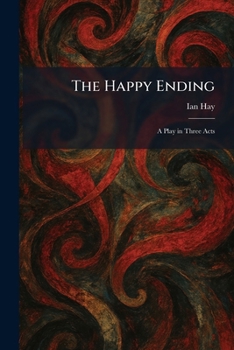
The Happy Ending: A Play in Three Acts

"The Happy Ending; A Play in Three Acts" is a compelling drama that explores themes of family legacy, social standing, and the complexity of personal identity. Written by the celebrated British playwright Ian Hay, the play centers on the Cradock family, whose quiet life is suddenly upended by the unexpected return of a figure from the past. As secrets emerge and long-held assumptions are challenged, the characters must navigate the tension between maintaining a respectable facade and confronting the truth of their history.
Combining elements of social comedy with poignant emotional depth, the work showcases Hay's skill in crafting naturalistic dialogue and engaging character arcs. The three-act structure allows for a nuanced exploration of how a single event can ripple through a household, forcing each member to reconsider their place within the family unit. "The Happy Ending" serves as an insightful study of human nature and the various ways individuals seek resolution and peace. This work remains a significant example of early 20th-century theater, reflecting the moral sensibilities and social nuances of its time with wit and sensitivity.
This work has been selected by scholars as being culturally important, and is part of the knowledge base of civilization as we know it. This work was reproduced from the original artifact, and remains as true to the original work as possible. Therefore, you may see the original copyright references, library stamps (as most of these works have been housed in our most important libraries around the world), and other notations in the work.
This work is in the public domain in the United States of America, and possibly other nations. Within the United States, you may freely copy and distribute this work, as no entity (individual or corporate) has a copyright on the body of the work.
As a reproduction of a historical artifact, this work may contain missing or blurred pages, poor pictures, errant marks, etc. Scholars believe, and we concur, that this work is important enough to be preserved, reproduced, and made generally available to the public. We appreciate your support of the preservation process, and thank you for being an important part of keeping this knowledge alive and relevant.
Related Subjects
DramaCustomer Reviews
ThriftBooks ® and the ThriftBooks ® logo are registered trademarks of Thrift Books Global, LLC
