


All Formats & Editions

The Hand of Ethelberta: A Comedy in Chapters

The Hand of Ethelberta
Young Mrs. Petherwin stepped from the door of an old and well-appointed inn in a Wessex town to take a country walk. By her look and carriage she appeared to belong to that gentle order of society which has no worldly sorrow except when its jewellery gets stolen; but, as a fact...
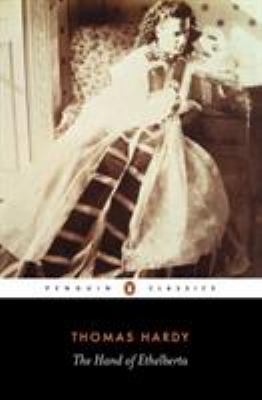
The Hand of Ethelberta
Adventuress and opportunist Ethelberta reinvents herself to disguise her humble origins launching a brilliant career as a society poet in London with her family acting incognito as her servants. Turning the male-dominated literary world to her advantage she happily exploits the...


The hand of Ethelberta: a comedy in chapters

The Hand of Ethelberta: A Comedy in Chapters
Originally published in 1912, this is a satirical work that looks at life from a perspective that was rarely seen at the time of writing, from the servants view. Since its original publication, the social foreground was reversed, and it became increasingly acceptable to present...

The Hand of Ethelberta
Opportunistic, shrewd and beautiful, Ethelberta resolves to disguise her humble beginnings and elevate her position in society. Crafting her career as a society poet and staging her family as her servants, she proves admirably adept at sustaining her own web of deceit as she...

The hand of Ethelberta: A comedy in chapters (H...
The Hand of Ethelberta: A Comedy in Chapters
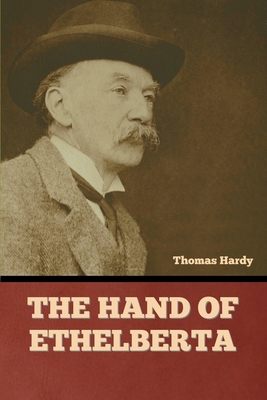
The Hand of Ethelberta
The Hand of Ethelberta: A Comedy in Chapters is a novel by Thomas Hardy, published in 1876. It was written, in serial form, for The Cornhill Magazine, which was edited by Leslie Stephen, a friend and mentor of Hardy's. Unlike the majority of Hardy's fiction, the novel is a...
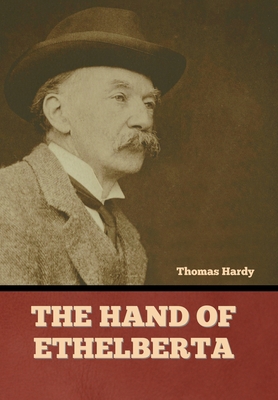
The Hand of Ethelberta
The Hand of Ethelberta: A Comedy in Chapters is a novel by Thomas Hardy, published in 1876. It was written, in serial form, for The Cornhill Magazine, which was edited by Leslie Stephen, a friend and mentor of Hardy's. Unlike the majority of Hardy's fiction, the novel is a...
The Hand of Ethelberta; A Comedy in Chapters: i...
The Hand of Ethelberta; A Comedy in Chapters: i...

The Hand of Ethelberta by Thomas Hardy, Fiction...
The Hand of Ethelberta. Heron Collected Works o...

The Hand Of Ethelberta - A Comedy In Chapters
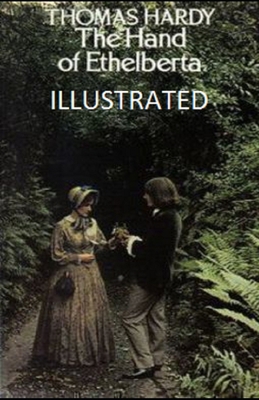
The Hand of Ethelberta Illustrated
The Hand of Ethelberta Illustrated

The Hand of Ethelberta Illustrated
The Hand of Ethelberta - A Comedy in Chapters
The Hand of Ethelberta: Classic literature
Thomas Hardy was one of the greatest British authors during the Victorian era. Hardy was highly critical of Victorian culture and also focused on the declining rural society. Though Hardy was a great poet it is his classic novels, such as Far from the Madding Crowd, Tess of the...


The Hand of Ethelberta (Penguin Classics)

The Hand of Ethelberta: A Comedy in Chapters
Red joins George Elliott Clarke's previous 'colouring' books--Blue and Black--in which he displays an expansive range of poetic forms and rhetorical poses. Its poems mix the candid sexuality of pre-Christian Rome with the pop sentimentally of Italian screen scores of the 1960s...
ThriftBooks® and the ThriftBooks® logo are registered trademarks of Thrift Books Global, LLC
