


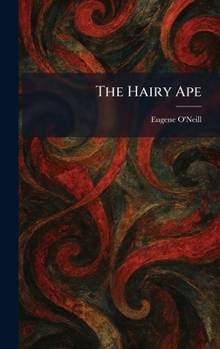
The Hairy Ape

"The Hairy Ape" is a seminal expressionist play by Nobel laureate Eugene O'Neill that explores the profound sense of alienation and class division in early 20th-century industrial society. The story follows Yank, a powerful and prideful stoker on an ocean liner, who believes he is the essential force driving the modern world. However, his self-image is shattered after a confrontation with Mildred Douglas, a wealthy socialite who views him as a subhuman beast. This encounter triggers a psychological crisis, leading Yank on a desperate search for belonging through the rigid social strata of New York City.
Through the use of heightened symbolism and innovative dramatic techniques, O'Neill examines the dehumanizing effects of industrialization and the struggle for identity in a world that treats individuals as mere cogs in a machine. "The Hairy Ape" remains a powerful critique of social hierarchy and a haunting portrayal of the modern man's struggle to find his place in the universe. It is widely considered one of the most important works in the canon of American drama, reflecting the turbulent shifts of the early 1900s.
This work has been selected by scholars as being culturally important, and is part of the knowledge base of civilization as we know it. This work was reproduced from the original artifact, and remains as true to the original work as possible. Therefore, you may see the original copyright references, library stamps (as most of these works have been housed in our most important libraries around the world), and other notations in the work.
This work is in the public domain in the United States of America, and possibly other nations. Within the United States, you may freely copy and distribute this work, as no entity (individual or corporate) has a copyright on the body of the work.
As a reproduction of a historical artifact, this work may contain missing or blurred pages, poor pictures, errant marks, etc. Scholars believe, and we concur, that this work is important enough to be preserved, reproduced, and made generally available to the public. We appreciate your support of the preservation process, and thank you for being an important part of keeping this knowledge alive and relevant.
Related Subjects
DramaCustomer Reviews
ThriftBooks ® and the ThriftBooks ® logo are registered trademarks of Thrift Books Global, LLC
