


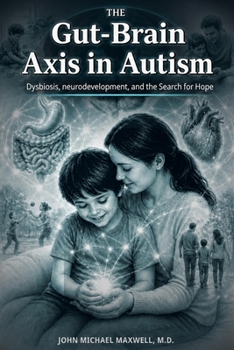
The Gut-Brain Axis in Autism: Evidence, Practical Tools, and Hope for Families After Diagnosis

The Gut-Brain Axis in Autism Spectrum Disorder explores one of the most important emerging questions in autism research: how gut health, microbial imbalance, inflammation, metabolism, sleep, feeding, pain, and neurodevelopment may interact in vulnerable children.
Written in a scientific yet family-centered style, this book presents a dysbiosis-centered gut-brain framework for understanding autism-related symptoms in a biologically susceptible subgroup of children. It does not claim that gut dysbiosis is the universal cause of autism, nor does it promise a cure. Instead, it offers a careful, evidence-informed review of the possible pathways linking the microbiome to developmental function, including intestinal permeability, microbial metabolites, immune activation, oxidative stress, mitochondrial strain, nutrient status, and communication readiness.
The book also emphasizes what should remain first-line: developmental support, speech-language therapy, AAC when needed, educational planning, sleep care, feeding support, family stability, and symptom-driven medical evaluation. More experimental approaches-including microbiome-directed therapies, antimicrobials, leucovorin, fecal microbiota transfer, hyperbaric oxygen therapy, stem cells, neuromodulation, and detox products-are discussed with caution and placed within an evidence hierarchy.
Blending scientific review, clinical perspective, practical tools, and a father's lived experience, this work is intended for parents, clinicians, researchers, and caregivers who want a thoughtful roadmap through the complex relationship between autism, gastrointestinal symptoms, and the gut-brain axis.
This book is for educational and informational purposes only and is not a substitute for individualized medical advice, diagnosis, or treatment from a qualified healthcare professional.
Related Subjects
PsychologyCustomer Reviews
ThriftBooks ® and the ThriftBooks ® logo are registered trademarks of Thrift Books Global, LLC
