


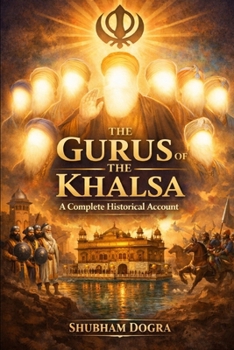
The Gurus of The Khalsa: A Complete Historical Account

The Gurus of the Khalsa: A Complete Historical Account is a meticulously researched and thoughtfully written historical work that traces the spiritual, social, and institutional development of Sikhism through the lives and teachings of its Gurus. Grounded in authentic historical sources, Sikh scriptures, Persian chronicles, and respected secondary scholarship, the book presents a comprehensive narrative that balances devotion with critical historical inquiry.
Beginning with the early foundations laid by Guru Nanak Dev Ji and moving through the transformative eras of Guru Amar Das Ji, Guru Ram Das Ji, Guru Arjan Dev Ji, and onward, this work examines how the Sikh Gurus shaped a distinct religious identity rooted in equality, ethical living, social justice, and resistance to oppression. Special attention is given to major institutional developments such as Langar, Manji and Pirhi systems, the founding of Ramdaspur (Amritsar), the compilation of the Adi Granth, and the construction of Harmandir Sahib, situating each within its broader historical and political context.
The book also explores the complex interactions between the Sikh Gurus and contemporary political powers, particularly the Mughal administration, highlighting moments of cooperation, tension, and conflict with careful historical evidence. Rather than treating Sikh history as isolated theology, the author presents it as a living tradition shaped by society, power, culture, and moral courage.
Written in clear, accessible English while maintaining scholarly rigor, The Gurus of the Khalsa serves as both an academic reference and a meaningful read for students, educators, researchers, and general readers interested in Sikh history. It stands as a serious contribution to the study of Sikhism-one that honors faith while remaining faithful to historical truth.
Customer Reviews
ThriftBooks® and the ThriftBooks® logo are registered trademarks of Thrift Books Global, LLC
