


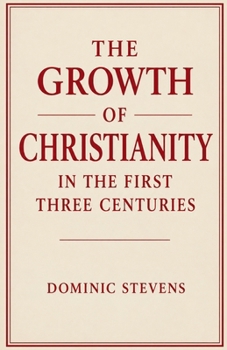
The Growth of Christianity in the First Three Centuries

The growth of Christianity during its first three centuries constitutes one of the most remarkable developments in the history of religion. Emerging from the eastern provinces of the Roman Empire as a small movement centered on the teachings and memory of Jesus of Nazareth, Christianity expanded across diverse social, linguistic, and cultural environments, eventually becoming a significant force throughout much of the Mediterranean world. By the end of the third century, long before imperial patronage transformed its public position, Christianity had developed a broad geographic presence, an increasingly sophisticated intellectual tradition, a recognizable institutional structure, and a powerful collective identity that enabled it to survive periods of crisis and persecution. Understanding how and why this transformation occurred remains one of the central questions of ancient history.
This book examines the rise of Christianity from approximately AD 30 to AD 300, tracing its development from a Jewish reform movement in Roman Palestine to a transregional religious community extending from Britain to Mesopotamia and from Egypt to the Danube. The narrative concludes deliberately at the opening of the fourth century, before the reign of Constantine and before Christianity received legal recognition from imperial authorities. Although later developments would profoundly affect the fortunes of the church, the foundations of Christian expansion were established during the first three centuries. The focus of this study is therefore not on Christianity as an imperial religion, but on Christianity as a minority movement struggling to define itself, organize its communities, and spread its message throughout a complex and often hostile world.
Customer Reviews
ThriftBooks ® and the ThriftBooks ® logo are registered trademarks of Thrift Books Global, LLC
