


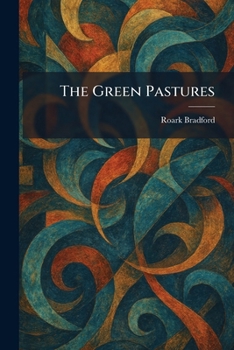
The Green Pastures

"The Green Pastures" is a celebrated collection of stories by Roark Bradford that reimagines various Old Testament narratives through the lens of Southern folk traditions and regional storytelling. In these pages, the grand themes of the Bible-from the Creation and the Garden of Eden to the journey of Moses-are brought to life with a unique narrative voice that blends humor, reverence, and communal wisdom. Each tale offers a distinctive perspective on the relationship between the divine and the everyday, presenting a version of spiritual history that is both deeply personal and culturally resonant.
Known for its imaginative breadth and its significant influence on early 20th-century American literature, the work serves as an important exploration of the transformation of religious mythology into folk literature. Bradford's storytelling highlights universal themes of faith, redemption, and human frailty, making "The Green Pastures" an enduring study of how ancient stories continue to find new life in different cultural contexts. This work remains a significant piece of American literary history, offering readers a window into the creative fusion of spiritual heritage and regional narrative style.
This work has been selected by scholars as being culturally important, and is part of the knowledge base of civilization as we know it. This work was reproduced from the original artifact, and remains as true to the original work as possible. Therefore, you may see the original copyright references, library stamps (as most of these works have been housed in our most important libraries around the world), and other notations in the work.
This work is in the public domain in the United States of America, and possibly other nations. Within the United States, you may freely copy and distribute this work, as no entity (individual or corporate) has a copyright on the body of the work.
As a reproduction of a historical artifact, this work may contain missing or blurred pages, poor pictures, errant marks, etc. Scholars believe, and we concur, that this work is important enough to be preserved, reproduced, and made generally available to the public. We appreciate your support of the preservation process, and thank you for being an important part of keeping this knowledge alive and relevant.
Customer Reviews
ThriftBooks ® and the ThriftBooks ® logo are registered trademarks of Thrift Books Global, LLC
