


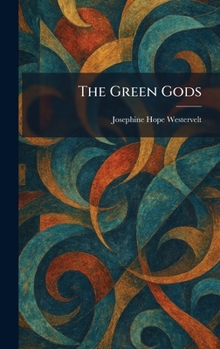
The Green Gods

"The Green Gods" is a captivating adventure set within the dense, untamed jungles of French Indochina. The narrative follows an intrepid group of American travelers and botanists as they embark on an arduous expedition into the heart of Southeast Asia. At the center of the story is a young woman whose courage is tested by the physical hardships of the wilderness and the complex cultural landscape she encounters.
As the expedition moves deeper into the forest, the characters grapple with the mysterious power of their surroundings and the local customs that challenge their Western perspectives. The work skillfully weaves together elements of suspense, romance, and moral reflection, reflecting the missionary-influenced storytelling style of the early 20th century. Josephine Hope Westervelt provides vivid depictions of the tropical environment, creating an atmospheric backdrop for a story about faith and resilience.
"The Green Gods" stands as a notable example of 1920s adventure literature, offering readers a glimpse into the era's fascination with remote lands and the intersection of exploration and spiritual purpose. It remains a significant work for those interested in the history of Christian fiction and colonial-era narratives.
This work has been selected by scholars as being culturally important, and is part of the knowledge base of civilization as we know it. This work was reproduced from the original artifact, and remains as true to the original work as possible. Therefore, you may see the original copyright references, library stamps (as most of these works have been housed in our most important libraries around the world), and other notations in the work.
This work is in the public domain in the United States of America, and possibly other nations. Within the United States, you may freely copy and distribute this work, as no entity (individual or corporate) has a copyright on the body of the work.
As a reproduction of a historical artifact, this work may contain missing or blurred pages, poor pictures, errant marks, etc. Scholars believe, and we concur, that this work is important enough to be preserved, reproduced, and made generally available to the public. We appreciate your support of the preservation process, and thank you for being an important part of keeping this knowledge alive and relevant.
Customer Reviews
ThriftBooks® and the ThriftBooks® logo are registered trademarks of Thrift Books Global, LLC
