


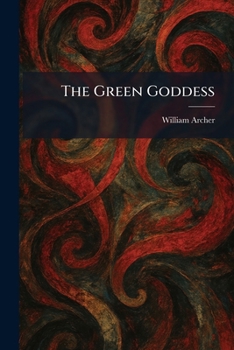
The Green Goddess

Select Format
Select Condition 
Book Overview
"The Green Goddess" is a gripping melodrama set in the mysterious and remote Himalayan kingdom of Rukh. Written by the renowned critic and playwright William Archer, the story follows a group of British travelers whose plane crashes in this isolated region, leading to their capture by the sophisticated yet vengeful Raja of Rukh. The Raja, educated in the West but deeply resentful of British colonial rule, holds the trio hostage as retribution for the lives of his brothers, who have been sentenced to death by the British government.
As the tension mounts, the work explores themes of cultural clash, imperial politics, and personal survival. Archer expertly balances suspense with sharp dialogue, creating a high-stakes adventure that features a memorable antagonist in the form of the calculating Raja. This work remains a significant example of early 20th-century stagecraft, blending elements of exoticism with the tropes of the classic thriller. Readers and enthusiasts of classic drama will find themselves drawn into the Raja's opulent palace, where the threat of execution looms over every civil conversation. "The Green Goddess" stands as a testament to Archer's skill in weaving political undertones into a popular theatrical format.
This work has been selected by scholars as being culturally important, and is part of the knowledge base of civilization as we know it. This work was reproduced from the original artifact, and remains as true to the original work as possible. Therefore, you may see the original copyright references, library stamps (as most of these works have been housed in our most important libraries around the world), and other notations in the work.
This work is in the public domain in the United States of America, and possibly other nations. Within the United States, you may freely copy and distribute this work, as no entity (individual or corporate) has a copyright on the body of the work.
As a reproduction of a historical artifact, this work may contain missing or blurred pages, poor pictures, errant marks, etc. Scholars believe, and we concur, that this work is important enough to be preserved, reproduced, and made generally available to the public. We appreciate your support of the preservation process, and thank you for being an important part of keeping this knowledge alive and relevant.
Customer Reviews
ThriftBooks ® and the ThriftBooks ® logo are registered trademarks of Thrift Books Global, LLC
