


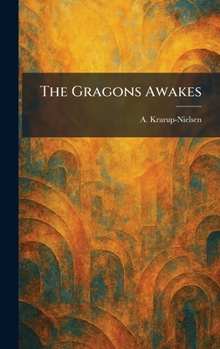
The Gragons Awakes

"The Dragon Awakes" is a compelling first-hand account of China during the tumultuous late 1920s, a period marked by revolutionary fervor and significant political transformation. Written by the traveler and journalist A. Krarup-Nielsen, the work provides a vivid eyewitness perspective on the Chinese Civil War and the rise of the nationalist movement. Through a series of detailed observations, the author captures the chaos and energy of a nation transitioning from imperial traditions into a modern, albeit fractured, era.
The narrative follows the author as he navigates the complex social and political landscape of a country in upheaval. He offers insights into the key figures and factions of the time, including the Kuomintang and the various military leaders vying for power. Beyond the battlefield, "The Dragon Awakes" explores the impact of these conflicts on the daily lives of the Chinese people, documenting the cultural and social shifts occurring in both bustling cities and rural provinces. This book serves as an important historical document for readers interested in early 20th-century Asian history, international relations, and the evolution of modern China.
This work has been selected by scholars as being culturally important, and is part of the knowledge base of civilization as we know it. This work was reproduced from the original artifact, and remains as true to the original work as possible. Therefore, you may see the original copyright references, library stamps (as most of these works have been housed in our most important libraries around the world), and other notations in the work.
This work is in the public domain in the United States of America, and possibly other nations. Within the United States, you may freely copy and distribute this work, as no entity (individual or corporate) has a copyright on the body of the work.
As a reproduction of a historical artifact, this work may contain missing or blurred pages, poor pictures, errant marks, etc. Scholars believe, and we concur, that this work is important enough to be preserved, reproduced, and made generally available to the public. We appreciate your support of the preservation process, and thank you for being an important part of keeping this knowledge alive and relevant.
Customer Reviews
ThriftBooks ® and the ThriftBooks ® logo are registered trademarks of Thrift Books Global, LLC
