


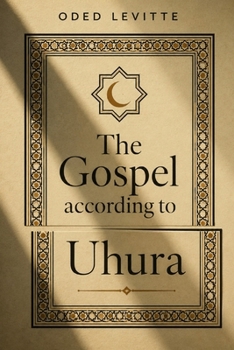
The Gospel according to Uhura

He lost his faith in the Mediterranean. He found a new one on the Bridge of the Enterprise.
Hamid Rahman made it across the Channel. His God didn't.
After surviving the crossing from Syria - seven people drowned in the same boat that carried him to England - Hamid arrives in Birmingham with nothing: no papers, no community, no language for what he saw. The mosque offers certainty he no longer trusts. The asylum system offers waiting rooms and forms. A radical study group offers answers that feel, terrifyingly, like they might work.
Then a British convert at the local library hands him a Star Trek DVD and says: just watch it.
What follows is not a conversion story. It is something stranger and more honest - the account of a man who builds an entire moral philosophy out of borrowed fiction, who writes a Captain's Log to navigate a world that has no Prime Directive, and who discovers that the principles of Starfleet - communication, diversity, the refusal to impose your truth on another civilization - are, in practice, more demanding than any scripture he has ever read.
The Gospel According to Uhura is a novel about what we do when the stories we were given stop working, and what it costs - and gives - to build new ones from whatever is at hand.
For readers of The Reluctant Fundamentalist by Mohsin Hamid, The Kite Runner by Khaled Hosseini, and anyone who has ever found more truth in fiction than in fact.
Customer Reviews
ThriftBooks ® and the ThriftBooks ® logo are registered trademarks of Thrift Books Global, LLC
