


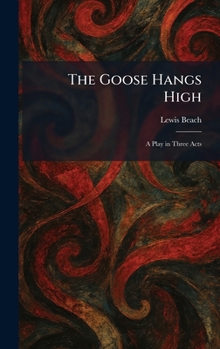
The Goose Hangs High: A Play in Three Acts

"The Goose Hangs High" is a compelling three-act play by Lewis Beach that explores the intricate dynamics of the American family during the early 20th century. Centered on the Ingals family, the narrative delves into the generational divide between devoted parents and their spirited, yet seemingly ungrateful, adult children. The story unfolds as the children return home for the holidays, revealing a disconnect between the traditional values of the elder Ingals and the modern, self-centered attitudes of the younger generation.
When a sudden crisis threatens the family's social and financial standing, the play shifts from a lighthearted domestic comedy into a poignant study of character and loyalty. As the family navigates these challenges, the work offers a insightful social commentary on the changing cultural landscape of the 1920s. Beach masterfully captures the dialogue and domestic tensions of the era, creating a work that is both a humorous comedy of manners and a sincere exploration of sacrifice and the enduring strength of family bonds. "The Goose Hangs High" remains a significant example of early 20th-century American theater, highlighting the timeless struggles between parents and children.
This work has been selected by scholars as being culturally important, and is part of the knowledge base of civilization as we know it. This work was reproduced from the original artifact, and remains as true to the original work as possible. Therefore, you may see the original copyright references, library stamps (as most of these works have been housed in our most important libraries around the world), and other notations in the work.
This work is in the public domain in the United States of America, and possibly other nations. Within the United States, you may freely copy and distribute this work, as no entity (individual or corporate) has a copyright on the body of the work.
As a reproduction of a historical artifact, this work may contain missing or blurred pages, poor pictures, errant marks, etc. Scholars believe, and we concur, that this work is important enough to be preserved, reproduced, and made generally available to the public. We appreciate your support of the preservation process, and thank you for being an important part of keeping this knowledge alive and relevant.
Related Subjects
DramaCustomer Reviews
ThriftBooks ® and the ThriftBooks ® logo are registered trademarks of Thrift Books Global, LLC
