


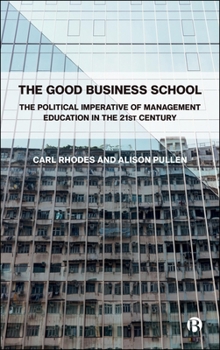
The Good Business School: The Political Imperative of Management in the 21st Century
No Customer Reviews

What makes a 'good' business school amid culture wars, inequality, and rising right-wing populism? This book argues that business schools cannot hide behind technocratic or scholarly neutrality. As social impact and stakeholder capitalism moved from boardrooms into lecture theatres, they became lightning rods in political battles over expertise, identity, and power.
From politicising 'wokeness' to state intrusion into academic freedom, the struggle is no longer rigour versus relevance but what kind of institution business schools choose to be. This book calls for a democratically engaged business school grounded in public value, committed to intellectual pluralism, and oriented toward shared prosperity.
Format:Paperback
Language:English
ISBN:1529250919
ISBN13:9781529250916
Release Date:December 2026
Publisher:Bristol University Press
Length:176 Pages
Customer Reviews
0 rating
Copyright © 2026 Thriftbooks.com
Terms of Use | Privacy Policy | Do Not Sell/Share My Personal Information | Cookie Policy | Cookie Preferences | Accessibility Statement
ThriftBooks ® and the ThriftBooks ® logo are registered trademarks of Thrift Books Global, LLC
ThriftBooks ® and the ThriftBooks ® logo are registered trademarks of Thrift Books Global, LLC
