


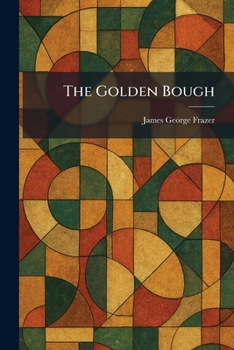
The Golden Bough


Select Format
Select Condition 
Book Overview
"The Golden Bough" is a monumental study in comparative religion and anthropology that explores the shared roots of human myth, ritual, and belief. Written by Sir James George Frazer, this influential work examines the evolution of human thought through three primary stages: from primitive magic to organized religion, and finally toward scientific understanding. By synthesizing a vast array of global folklore and cultural practices, Frazer seeks to explain the origins of the ancient Roman priesthood of Diana at Nemi and the archetype of the dying and rising god.
The work provides a detailed look at the universal patterns underlying human spirituality, covering topics such as seasonal festivals, sacrificial rites, and the transition of power in sacred kingship. Frazer's extensive research into the customs of various societies illustrates a profound connection between ancient traditions and the psychological foundations of modern civilization. "The Golden Bough" has left an indelible mark on 20th-century literature and the social sciences, serving as an essential resource for understanding the enduring power of myth in human history. Its blend of meticulous scholarship and compelling narrative remains a cornerstone of intellectual inquiry into the origins of religious practice and the development of the human mind.
This work has been selected by scholars as being culturally important, and is part of the knowledge base of civilization as we know it. This work was reproduced from the original artifact, and remains as true to the original work as possible. Therefore, you may see the original copyright references, library stamps (as most of these works have been housed in our most important libraries around the world), and other notations in the work.
This work is in the public domain in the United States of America, and possibly other nations. Within the United States, you may freely copy and distribute this work, as no entity (individual or corporate) has a copyright on the body of the work.
As a reproduction of a historical artifact, this work may contain missing or blurred pages, poor pictures, errant marks, etc. Scholars believe, and we concur, that this work is important enough to be preserved, reproduced, and made generally available to the public. We appreciate your support of the preservation process, and thank you for being an important part of keeping this knowledge alive and relevant.
Customer Reviews
Finally!
An Indispensable resource
History Buffs welcome!
ThriftBooks ® and the ThriftBooks ® logo are registered trademarks of Thrift Books Global, LLC
