


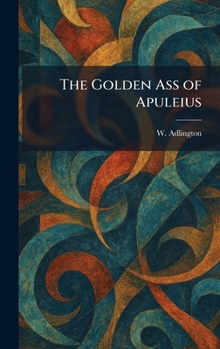
The Golden Ass of Apuleius

"The Golden Ass of Apuleius", also known as the "Metamorphoses", stands as the only ancient Roman novel to survive in its entirety. A masterpiece of picaresque fiction and satire, the narrative follows the misadventures of a young provincial man named Lucius. Driven by an insatiable curiosity for the occult, Lucius attempts to transform himself into a bird but accidentally turns into a donkey instead. Through the eyes of this beast of burden, the reader is taken on a sprawling journey across the Roman Empire, encountering a vibrant cast of thieves, sorcerers, and commoners.
The work is perhaps most famous for containing the enchanting story of "Cupid and Psyche", a profound allegory of the soul's quest for divine union. As Lucius endures numerous hardships and humiliations in his animal form, his physical journey parallels a spiritual awakening that eventually leads to a powerful encounter with the goddess Isis. Translated by William Adlington, this version preserves the wit, bawdiness, and mystical depth of the original text. "The Golden Ass of Apuleius" remains a foundational work of Western literature, offering an unparalleled glimpse into the folklore, religion, and social life of the ancient world.
This work has been selected by scholars as being culturally important, and is part of the knowledge base of civilization as we know it. This work was reproduced from the original artifact, and remains as true to the original work as possible. Therefore, you may see the original copyright references, library stamps (as most of these works have been housed in our most important libraries around the world), and other notations in the work.
This work is in the public domain in the United States of America, and possibly other nations. Within the United States, you may freely copy and distribute this work, as no entity (individual or corporate) has a copyright on the body of the work.
As a reproduction of a historical artifact, this work may contain missing or blurred pages, poor pictures, errant marks, etc. Scholars believe, and we concur, that this work is important enough to be preserved, reproduced, and made generally available to the public. We appreciate your support of the preservation process, and thank you for being an important part of keeping this knowledge alive and relevant.
Customer Reviews
ThriftBooks ® and the ThriftBooks ® logo are registered trademarks of Thrift Books Global, LLC
