


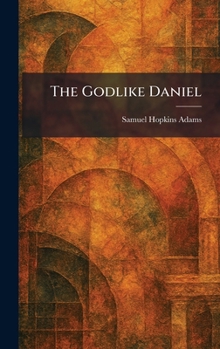
The Godlike Daniel

"The Godlike Daniel" is a compelling biographical study of one of the most influential and charismatic figures in American history: Daniel Webster. Written by Samuel Hopkins Adams, this work brings to life the man known for his thunderous oratory, legal brilliance, and dominant presence in the 19th-century political arena. As a statesman who played a pivotal role in the great debates of his time, Webster's legacy is explored through his efforts to preserve the Union and his contributions to the development of American constitutional law.
The narrative captures the essence of the antebellum period, tracing Webster's career from his roots in New England to the halls of Congress and his service as Secretary of State. Adams examines the dualities of Webster's character-his monumental public persona versus his private ambitions and debts. By focusing on his legendary speeches and his impact on the Supreme Court, the book illustrates why Webster was revered and feared by his peers. "The Godlike Daniel" serves as an insightful exploration of power, eloquence, and the tumultuous years leading up to the Civil War, making it a valuable resource for anyone interested in the giants of American political history.
This work has been selected by scholars as being culturally important, and is part of the knowledge base of civilization as we know it. This work was reproduced from the original artifact, and remains as true to the original work as possible. Therefore, you may see the original copyright references, library stamps (as most of these works have been housed in our most important libraries around the world), and other notations in the work.
This work is in the public domain in the United States of America, and possibly other nations. Within the United States, you may freely copy and distribute this work, as no entity (individual or corporate) has a copyright on the body of the work.
As a reproduction of a historical artifact, this work may contain missing or blurred pages, poor pictures, errant marks, etc. Scholars believe, and we concur, that this work is important enough to be preserved, reproduced, and made generally available to the public. We appreciate your support of the preservation process, and thank you for being an important part of keeping this knowledge alive and relevant.
Customer Reviews
ThriftBooks ® and the ThriftBooks ® logo are registered trademarks of Thrift Books Global, LLC
