


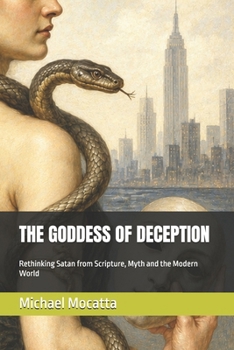
The Goddess of Deception: Rethinking Satan from Scripture, Myth and the Modern World

What if the oldest deception in history has been hiding in plain sight?
For centuries, Satan has been imagined as a red, horned, masculine figure - a dark ruler, a rebel king, a warrior of evil. But where does Scripture actually say that?
The Goddess of Deception challenges the familiar picture and asks readers to look again at the biblical text, beginning in Eden. Scripture does not describe Satan first as a monster, but as a being of extraordinary beauty, wisdom, light and splendour - the anointed cherub, perfect in beauty, whose heart was lifted up because of that beauty.
Michael Mocatta traces a bold and provocative argument through Scripture, ancient mythology and the modern world: that Satan is not biologically female, but operates through an archetypally feminine pattern of beauty, seduction, hidden knowledge, counterfeit liberation and spiritual deception.
This is not an attack on women or femininity. Quite the opposite. The feminine is presented as something sacred, powerful and God-given - precisely the thing the enemy seeks to counterfeit and corrupt. Satan does not counterfeit what is worthless. He counterfeits what is sacred.
From the garden of Eden to the worship of Ishtar, Asherah, Isis, Aphrodite and Venus, from the mystery religions to modern spiritual movements, this book follows the recurring pattern of the same ancient offer:
You will be like God. You will know. You will be free.
Inside this book, you will explore:
Why the serpent approached Eve and not AdamWhy the Nachash may not have appeared as a snake before the curseHow Ezekiel 28 and Isaiah 14 reveal Satan's beauty, pride and fallThe connection between Lucifer, Venus and the morning starHow goddess worship reflects a counterfeit spiritual patternWhy deception often comes through beauty, wisdom and hidden knowledgeHow the same strategy continues in modern culture and ideologyWhy the answer to the first garden is found in Christ, the seed of the womanThe Goddess of Deception is a theological investigation, a biblical argument and a cultural warning. It invites the reader to revisit the oldest story in the world with fresh eyes - and to recognise that the enemy's strategy has never really changed.
The garden is different. The offer is the same.
Customer Reviews
ThriftBooks ® and the ThriftBooks ® logo are registered trademarks of Thrift Books Global, LLC
