


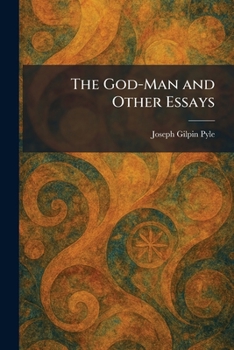
The God-Man and Other Essays

"The God-Man and Other Essays" is a profound collection of intellectual inquiries into the nature of faith, the character of divinity, and the moral responsibilities of humanity. Written by Joseph Gilpin Pyle, this volume brings together a series of thoughtful essays that bridge the gap between rigorous philosophical analysis and spiritual contemplation.
At the heart of the work is the title essay, which examines the concept of the God-man, exploring the theological implications of the divine incarnate and its significance for the human condition. Beyond this central theme, Pyle delves into broader questions of religious experience, ethical living, and the evolving relationship between individual conscience and organized belief. His prose is marked by clarity and a deep respect for the intellectual traditions that have shaped religious thought.
This collection serves as a significant reflection of early 20th-century religious discourse, offering readers a window into the era's grappling with modernity and tradition. Whether addressing specific theological points or universal human concerns, "The God-Man and Other Essays" remains a valuable resource for those interested in the history of ideas, the philosophy of religion, and the enduring quest for spiritual meaning.
This work has been selected by scholars as being culturally important, and is part of the knowledge base of civilization as we know it. This work was reproduced from the original artifact, and remains as true to the original work as possible. Therefore, you may see the original copyright references, library stamps (as most of these works have been housed in our most important libraries around the world), and other notations in the work.
This work is in the public domain in the United States of America, and possibly other nations. Within the United States, you may freely copy and distribute this work, as no entity (individual or corporate) has a copyright on the body of the work.
As a reproduction of a historical artifact, this work may contain missing or blurred pages, poor pictures, errant marks, etc. Scholars believe, and we concur, that this work is important enough to be preserved, reproduced, and made generally available to the public. We appreciate your support of the preservation process, and thank you for being an important part of keeping this knowledge alive and relevant.
Customer Reviews
ThriftBooks® and the ThriftBooks® logo are registered trademarks of Thrift Books Global, LLC
