


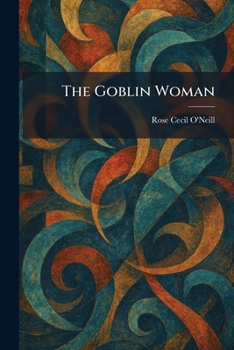
The Goblin Woman

Select Format
Select Condition 
Book Overview
"The Goblin Woman" is a hauntingly atmospheric novel that blends elements of the Gothic tradition with a deep, psychological exploration of its characters. Written by the multi-talented artist and author Rose Cecil O'Neill, the story is set against the evocative backdrop of a coastal community, where the boundaries between the natural world and the mysterious often seem to blur.
The narrative follows the arrival of Helga, an enigmatic woman whose presence disrupts the social fabric of the town. As the inhabitants grapple with her unconventional nature and the secrets she carries, the novel delves into themes of isolation, beauty, and the restrictive societal pressures placed upon women. Through lyrical prose and a keen eye for human emotion, O'Neill crafts a tale that is as much about the inner landscape of the mind as it is about the rugged terrain of its setting.
"The Goblin Woman" showcases the author's unique artistic vision, offering a profound and often dark meditation on identity and belonging. This work remains a compelling example of early 20th-century American literary fiction, appealing to readers of classic Gothic mysteries and those interested in the complex intersections of art and literature.
This work has been selected by scholars as being culturally important, and is part of the knowledge base of civilization as we know it. This work was reproduced from the original artifact, and remains as true to the original work as possible. Therefore, you may see the original copyright references, library stamps (as most of these works have been housed in our most important libraries around the world), and other notations in the work.
This work is in the public domain in the United States of America, and possibly other nations. Within the United States, you may freely copy and distribute this work, as no entity (individual or corporate) has a copyright on the body of the work.
As a reproduction of a historical artifact, this work may contain missing or blurred pages, poor pictures, errant marks, etc. Scholars believe, and we concur, that this work is important enough to be preserved, reproduced, and made generally available to the public. We appreciate your support of the preservation process, and thank you for being an important part of keeping this knowledge alive and relevant.
Customer Reviews
ThriftBooks ® and the ThriftBooks ® logo are registered trademarks of Thrift Books Global, LLC
