


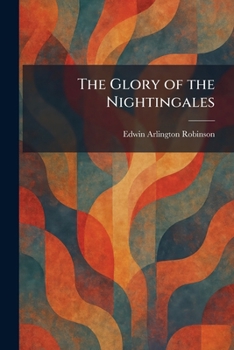
The Glory of the Nightingales

"The Glory of the Nightingales" is a masterful narrative poem by the Pulitzer Prize-winning American author Edwin Arlington Robinson. This work provides a profound psychological exploration of two men whose lives are inextricably linked by past betrayal and the pursuit of vengeance. The story centers on Malory, a man who has harbored a lethal resentment toward his former friend, Nightingale, for many years. As Malory embarks on a journey to confront and kill his rival, the poem unfolds with the somber intensity and rhythmic precision for which Robinson is renowned.
Upon his arrival, Malory finds Nightingale not as a flourishing villain, but as a man physically and spiritually broken by his own past actions and encroaching illness. The dialogue and inner monologues that follow serve as a haunting meditation on the futility of hatred and the weight of conscience. Written in blank verse, "The Glory of the Nightingales" demonstrates Robinson's exceptional ability to translate complex human emotions into enduring literary art. It remains a poignant study of the human condition, focusing on the transformative power of forgiveness and the search for peace at the end of a long and troubled journey.
This work has been selected by scholars as being culturally important, and is part of the knowledge base of civilization as we know it. This work was reproduced from the original artifact, and remains as true to the original work as possible. Therefore, you may see the original copyright references, library stamps (as most of these works have been housed in our most important libraries around the world), and other notations in the work.
This work is in the public domain in the United States of America, and possibly other nations. Within the United States, you may freely copy and distribute this work, as no entity (individual or corporate) has a copyright on the body of the work.
As a reproduction of a historical artifact, this work may contain missing or blurred pages, poor pictures, errant marks, etc. Scholars believe, and we concur, that this work is important enough to be preserved, reproduced, and made generally available to the public. We appreciate your support of the preservation process, and thank you for being an important part of keeping this knowledge alive and relevant.
Related Subjects
PoetryCustomer Reviews
ThriftBooks ® and the ThriftBooks ® logo are registered trademarks of Thrift Books Global, LLC
