


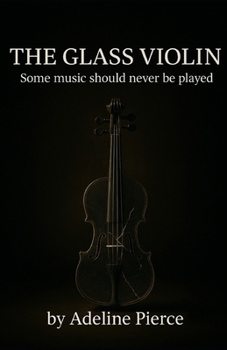
The Glass Violin: Some music should never be played

In a European conservatory with a long memory and quarrelsome corridors, a young violinist, Elara Voss, inherits a dangerous ritual and a page of music that asks too much. The old hall below wants spectacle; the city wants a miracle. Elara and a small circle of witnesses-Helena, Janek, the librarian, a watchful organist, a stubborn director-refuse the hunger of rooms and begin teaching a different craft: nine for rooms, twelve for streets, the rest for each other.
What starts as a private discipline becomes a civic practice. A prototype breathes in a rebaptized workshop (B-12), a manual circulates "not for sale," benches and bakeries turn into stations where strangers pass a single rest from hand to hand. When a blackout, a flood-heavy storm, and a ministerial evaluation arrive, the building no longer auditions for divinity; it behaves. The city learns to decide slower.
The Glass Violin is a quiet literary novel about craft over spectacle, refusal as care, and the ordinary heroism of kitchens. Piercing and humane, it asks a simple question with uncommon rigor: what if the bravest music is the one you refuse to play? For readers of Claire Keegan, Ali Smith, and Kazuo Ishiguro's gentler moods-novels where grace looks like maintenance and endings close with thanks and a sink.
Customer Reviews
ThriftBooks® and the ThriftBooks® logo are registered trademarks of Thrift Books Global, LLC
