


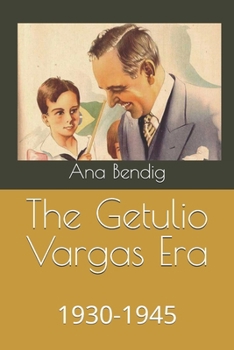
The Getulio Vargas Era: 1930-1945

Between 1930 and 1945, Brazil experienced one of the most significant authoritarian experiments in its modern history. Under the leadership of Get lio Vargas, the Estado Novo reconfigured political power, redefined national identity, and reshaped relations between state and society.
This book offers a rigorous historical analysis of the Vargas regime, situating it within the broader crisis of liberal democracy that characterised the interwar period. Through a detailed examination of political discourse, institutional change, and ideological production, it explores how authoritarian ideas such as anti-liberalism, nationalism, corporatism, and anti-communism were articulated and legitimised in Brazil.
Drawing upon comparative perspectives, the study examines ideological convergences and divergences between Vargas's authoritarianism and European fascist regimes, particularly Nazi Germany. It also addresses the construction of the "new man", the role of education and propaganda, and the contradictions of racial democracy, including the regime's exclusionary policies towards Jewish refugees.
By analysing authoritarianism as part of a wider political culture rather than as an isolated national phenomenon, this book contributes to ongoing debates in political history, Latin American studies, and the history of fascism. It will be of interest to scholars and students of modern history, political ideology, and twentieth-century authoritarian regimes.
Related Subjects
HistoryCustomer Reviews
ThriftBooks® and the ThriftBooks® logo are registered trademarks of Thrift Books Global, LLC
