


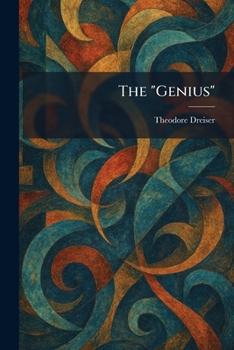
The "Genius"

"The "Genius"" is a monumental exploration of the artistic temperament and the relentless drive for success in early twentieth-century America. Written by Theodore Dreiser, a master of American Naturalism, the novel follows the life of Eugene Witla, a gifted young man from a small town in Illinois who travels to Chicago and New York to pursue his dreams as a painter.
As Witla rises through the ranks of the commercial art world and the publishing industry, he finds himself caught between his pursuit of aesthetic excellence and the seductive lures of wealth, status, and romantic passion. Dreiser meticulously charts Witla's emotional and professional fluctuations, offering a searing critique of the social and moral pressures that shape the modern individual. The narrative delves deep into the complexities of marriage, the fickleness of fame, and the internal conflict between one's creative vision and the demands of a materialistic society.
Often considered Dreiser's most autobiographical work, "The "Genius"" remains a compelling study of a flawed protagonist seeking meaning in a rapidly changing world. Its expansive scope and psychological depth cement its place as a significant contribution to American literature, capturing the raw energy and inherent contradictions of the American experience.
This work has been selected by scholars as being culturally important, and is part of the knowledge base of civilization as we know it. This work was reproduced from the original artifact, and remains as true to the original work as possible. Therefore, you may see the original copyright references, library stamps (as most of these works have been housed in our most important libraries around the world), and other notations in the work.
This work is in the public domain in the United States of America, and possibly other nations. Within the United States, you may freely copy and distribute this work, as no entity (individual or corporate) has a copyright on the body of the work.
As a reproduction of a historical artifact, this work may contain missing or blurred pages, poor pictures, errant marks, etc. Scholars believe, and we concur, that this work is important enough to be preserved, reproduced, and made generally available to the public. We appreciate your support of the preservation process, and thank you for being an important part of keeping this knowledge alive and relevant.
Customer Reviews
ThriftBooks ® and the ThriftBooks ® logo are registered trademarks of Thrift Books Global, LLC
