


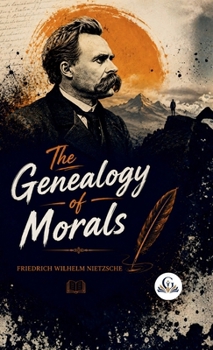
The Genealogy of Morals

Where do our ideas of good and evil come from? Why do people experience guilt, develop a troubled conscience, or embrace ideals of selfdenial? In The Genealogy of Morals, Friedrich Nietzsche undertakes a provocative investigation into the origins and development of moral values, challenging readers to reconsider assumptions that often appear unquestionable.
Through three interconnected essays, Nietzsche examines the historical and psychological foundations of morality. The first explores the contrast between "good and evil" and "good and bad," questioning how these concepts emerged and what they reveal about the people and cultures that created them.
The second turns toward guilt, bad conscience, punishment, responsibility, and the inner conflict of human beings. Nietzsche investigates how moral feelings can develop and transform, offering a challenging account of the relationship between society, instinct, discipline, and selfawareness.
The final essay examines the meaning and influence of ascetic ideals-ideals associated with restraint, suffering, selfdenial, and the search for purpose. Throughout the work, Nietzsche combines philosophical criticism with psychological and cultural analysis to investigate why human beings create moral systems and how those systems shape the way we understand ourselves.
Essential reading for those interested in Nietzsche, moral philosophy, ethics, psychology, existentialism, cultural criticism, and the history of ideas, this classic remains a powerful invitation to question inherited values and examine the deeper forces behind human morality.
Related Subjects
PhilosophyCustomer Reviews
ThriftBooks ® and the ThriftBooks ® logo are registered trademarks of Thrift Books Global, LLC
