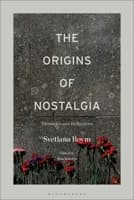
From an award-winning cultural theorist, the classic work on the intricate relationship between longing and belonging "A remarkable book... brilliant."―New York Times Can one be nostalgic for the home one never had? Why is it that the age of globalization is accompanied by a no less global epidemic of nostalgia? Can we know what we are nostalgic for? In the seventeenth century, Swiss doctors believed that opium, leeches, and a trek through the Alps would cure nostalgia. In 1733 a Russian commander, disgusted with the debilitating homesickness rampant among his troops, buried a soldier alive as a deterrent to nostalgia. In The Future of Nostalgia, Svetlana Boym develops a comprehensive approach to this elusive ailment. Combining personal memoir, philosophical essay, and historical analysis, Boym explores the spaces of collective nostalgia that connect national biography and personal self-fashioning in the twenty-first century.
"How to begin again? How to be happy, to invent ourselves, shedding the inertia of the past? How to experience life & life alone, "that dark, driving, insatiable power that lusts after itself?" These were the questions that bothered the moderns. Happiness, and not merely a longing for it, meant forgetfulness & a new perception of time." "The modern opposition between tradition & revolution is treacherous......" So opens the second chapter of Svetlana Boym's "The Future Of Nostalgia" after she has traced the roots of the concept from being identified as a DISEASE of Swiss exiles into a recognition of the problem of all mankind at the start of the 21st century. I hope I'm not wrong in saying that I think that this book may be an important new cornerstone in art, poli-sci & philosophy. I like this book THAT MUCH.... Ms. Boym's book fell into my hands quite serendipitously as I was researching material for my own novel; I was doing a search on "hypochondria" for a character I was trying to delineate with a certain kind of homesickness, and up popped the heading "Hypochondria Of The Heart" for an interview with Ms. Boym in a newspaper from Harvard University where she is a professor of Slavic Literature. The premise for her book deeply intrigued me since she elucidated some similar points that I had been trying to frame in my own work. I hurriedly ordered her book from our local library, anticipating something groundbreaking. I wasn't disappointed. This book traces a link between poetry, philosophy & politics in the modern age which is rooted in nostalgia, the longing for home & the feeling of loss due to a disctinctly modern concept of time. However, this is no futile deconstructionist tract, nor is it a conservative tome yammering on about the pervasive influences of the enemy in a "See? We told you so!" smug-but-ineffective posturing. What Ms. Boym does is show both healthy & unhealthy effects of nostalgia on history & memory. The first part of the book lays out what the modern conception of time has done to modernity, popular culture, conspiracies & collective memory, et. al. This clarifies the reality of the problem of modern life not as meaningless, but a somatization of symptoms attributed to to fractured parts of humanity, cultural & individual. She doesn't stop there, however. Boym is savvy enough to show examples of her position in parts two & three of the book. Part two shows the impact of longing for return on Moscow, St. Petersburg, Berlin & Europe in general. This cements evidence for the concept of modern time on TRADITION, by showingwhat particular post-Communist cities do to reinstill history after years of trying to synthesize it. Part three cleverly goes to the other side for a balance by showing the longings of exiles like Nabakov,Brodsky & Kabakov.In this mode, the idea of nostalgia affecting historical tradition is expanded to included the revolutionary INDIVIDUAL going