


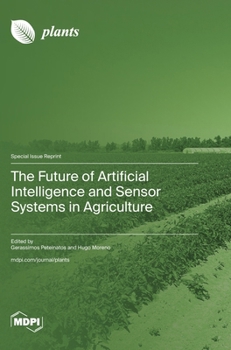
The Future of Artificial Intelligence and Sensor Systems in Agriculture

This Reprint details the evolution of Agriculture 4.0 by focusing on the critical synergy between advanced hardware and sophisticated AI algorithms. It argues that the next phase of farming is defined by the transition from simple data collection to autonomous decision-making, where sensing tools such as hyperspectral cameras and stereo-depth systems provide raw input for high-level machine learning models. A major focus is the technical shift from traditional neural networks to transformer-based architectures and attention mechanisms, transforming crop management, weeds and pest management, and disease pathology, which can also allow agricultural robots to better navigate the visual noise of outdoor environments, such as changing light and overlapping foliage. Additionally, the reprint emphasizes the importance of model miniaturization, which enables these complex AI systems to run locally on drones and ground vehicles rather than relying on remote servers. By combining these edge-computing capabilities with human-like robotic dexterity, the industry is moving toward a future of high-precision, automated management for tasks ranging from disease detection to delicate harvesting.
Customer Reviews
ThriftBooks ® and the ThriftBooks ® logo are registered trademarks of Thrift Books Global, LLC
