


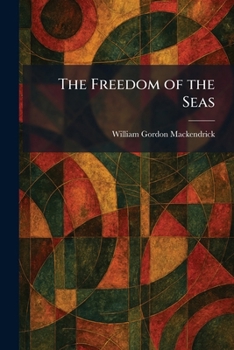
The Freedom of the Seas

"The Freedom of the Seas" is an insightful examination of the strategic and political importance of maritime sovereignty during the interwar period. Written by William Gordon Mackendrick, known for his geopolitical and providential interpretations of history, the work explores the intricate relationship between the United States and the British Empire regarding naval supremacy. The text delves into the legal and military frameworks that govern the world's oceans, arguing that the security of international trade and the maintenance of global peace depend upon the cooperation of the English-speaking nations.
The book provides a detailed analysis of maritime rights, the challenges of neutral shipping during wartime, and the evolving nature of naval warfare in the early 20th century. Mackendrick emphasizes the historical necessity of maintaining free passage across the seas as a cornerstone of modern civilization. By addressing the tensions surrounding naval disarmament and parity, the author offers a compelling look at the diplomatic efforts to prevent future conflict. This volume is an essential resource for those interested in naval history, international law, and the strategic foundations of the 20th-century geopolitical order.
This work has been selected by scholars as being culturally important, and is part of the knowledge base of civilization as we know it. This work was reproduced from the original artifact, and remains as true to the original work as possible. Therefore, you may see the original copyright references, library stamps (as most of these works have been housed in our most important libraries around the world), and other notations in the work.
This work is in the public domain in the United States of America, and possibly other nations. Within the United States, you may freely copy and distribute this work, as no entity (individual or corporate) has a copyright on the body of the work.
As a reproduction of a historical artifact, this work may contain missing or blurred pages, poor pictures, errant marks, etc. Scholars believe, and we concur, that this work is important enough to be preserved, reproduced, and made generally available to the public. We appreciate your support of the preservation process, and thank you for being an important part of keeping this knowledge alive and relevant.
Customer Reviews
ThriftBooks ® and the ThriftBooks ® logo are registered trademarks of Thrift Books Global, LLC
