


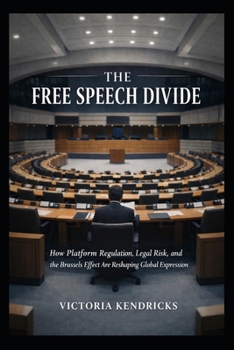
The Free Speech Divide: How Platform Regulation, Legal Risk, and the Brussels Effect Are Reshaping Global Expression

The right to speak freely was once a question for courts. Now it is a question for algorithms.
In the decades since the post-war speech settlement, European democracies developed a distinctive approach to expression: judicial mediation, not absolutism. Speech rights were real, but they could be limited when a government could demonstrate the limitation was necessary in a democratic society. That logic, applied case by case in a Strasbourg courtroom, worked reasonably well at the speed of litigation.
Then platforms scaled to billions of users. The balancing test didn't disappear - it was industrialized.
The Free Speech Divide is a data-driven institutional analysis of how European regulatory frameworks, platform compliance economics, and the structural logic of risk asymmetry are reshaping what people can say online - not just in Europe, but globally. It traces the Brussels Effect (how EU rules travel to jurisdictions that never voted for them), the institutional incentives that produce over-moderation without ideological intent, and the measurable consequences for democratic participation and institutional trust.
Written in the tradition of evidence-based political analysis, this book takes no side. It explains the structure. Readers across the political spectrum will find their strongest arguments taken seriously - and complicated.
For readers of The Great Divide, The Age of Surveillance Capitalism, and analytical nonfiction that earns its conclusions.
Customer Reviews
ThriftBooks ® and the ThriftBooks ® logo are registered trademarks of Thrift Books Global, LLC
