


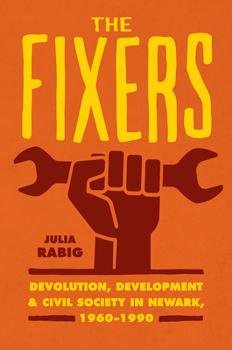
The Fixers: Devolution, Development, and Civil Society in Newark, 1960-1990
No Customer Reviews

Stories of Newark's postwar decline are easy to find. But in The Fixers, Julia Rabig supplements these tales of misery with the story of the many imaginative challenges to the city's decline mounted by Newark's residents and suburban neighbors. In these pages, we meet the black nationalists whose dynamic organizing elected African American candidates in unprecedented numbers. There are tenants who mounted a historic rent strike to transform public housing and renegade white Catholic priests who joined black laywomen to pioneer the construction of low-income housing and influence housing policy. These are just a few of the "fixers" we meet--people who devised ways to work with limited resources and pull together the threads of a patchwork welfare state. Rabig argues that fixers play dual roles. They support resistance, but also mediation; they fight for reform, but also more radical and far-reaching alternatives; they rally others to a collective cause, but sometimes they broker factions. Fixers reflect longer traditions of organizing while responding to the demands of their times. In so doing, they end up fixing (like a fixative) a new and enduring pattern of activist strategies, reforms, and institutional expectations--a pattern we continue to see today.
Format:Hardcover
Language:English
ISBN:022638831X
ISBN13:9780226388311
Release Date:September 2016
Publisher:University of Chicago Press
Length:336 Pages
Weight:1.43 lbs.
Dimensions:1.4" x 6.0" x 9.1"
Related Subjects
HistoryCustomer Reviews
0 rating
Copyright © 2026 Thriftbooks.com Terms of Use
| Privacy Policy | Do Not
Sell/Share My Personal Information | Cookie Policy | Cookie Preferences | Accessibility Statement
ThriftBooks® and the ThriftBooks® logo are registered trademarks of Thrift Books Global, LLC
ThriftBooks® and the ThriftBooks® logo are registered trademarks of Thrift Books Global, LLC
