


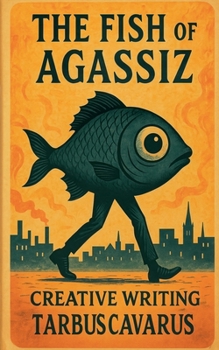
The Fish of AgassiZ - Creative Writing

What if Franz Kafka wandered through an Eastern European port city drunk on mint tea, industrial smoke, Orthodox mysticism, erotic obsession, and philosophical delirium?
In The Fish of AgassiZ, Tarbus Cavarus assembles a fragmented literary universe populated by railway station prophets, melancholic workers, erotic saints, grotesque intellectuals, wandering madmen, failed revolutionaries, mystics, drunkards, and dreamers trapped somewhere between memory and hallucination.
Part prose poetry, part absurdist confession, part surrealist scripture, this collection rejects traditional storytelling in favour of feverish visions where locomotives breathe like ancient beasts, nuns become erotic myths, philosophy dissolves into vulgarity, and entire civilizations collapse beneath the glow of caf lights and railway signals. The stories drift between industrial landscapes, Black Sea towns, decaying apartment blocks, brothels, churches, trolleybuses, slaughterhouses, abandoned factories, and metaphysical dreamscapes where nothing remains stable except desire itself.
Influenced by surrealism, Dadaism, grotesque satire, Eastern European absurdism, erotic folklore, and avant-garde literature, Cavarus writes with a voice that is simultaneously poetic, obscene, philosophical, violent, tender, and deeply human. Every page feels like a transmission from a collapsing world where beauty and degeneration walk hand in hand.
Inside this literary labyrinth you will encounter:
philosophical madmen preaching apocalypse, erotic manifestos disguised as love letters, absurd religious ceremonies, haunted industrial landscapes, nostalgic visions of post-communist decay, grotesque humour, surreal romance, and fragmented meditations on identity, entropy, memory, sensuality, faith, violence, and freedom.The Fish of AgassiZ is not merely read - it is inhaled like cigarette smoke in a midnight railway station while distant loudspeakers announce the collapse of reality.
Perfect for readers of experimental fiction, surrealist literature, absurdist prose, dark satire, grotesque eroticism, and avant-garde storytelling in the tradition of Bruno Schulz, Samuel Beckett, Andr Breton, and Louis-Ferdinand C line.
Customer Reviews
ThriftBooks ® and the ThriftBooks ® logo are registered trademarks of Thrift Books Global, LLC
