


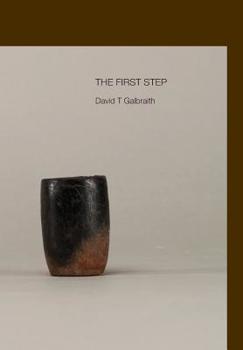
The First Step
No Customer Reviews

The First Step places consciousness in an evolutionary history that is common with that of the body and our evolutionary predecessors, and at the same time and consistent with human experience. The thesis is stated in Chapter Four: "Consciousness is an occurrence of a special ontological nature. It is not material and it is not metaphysical. It is quasi-ontological." By quasi-ontological is meant that it is not material like the body and the habitat, but occurs 'as-if being' in relation to the body and the habitat. It might be called 'earthly intangibility'. The core concept is explained in Chapter Nine: Scale. Consciousness occurs as an intangible field where we scale the habitat so that its parts are commensurable with each other and with the body. This solution to the problem of consciousness gives a proper place to all human endeavors: the sciences, the life sciences, the humanities, law and moral philosophy, the arts and religion. Most importantly, it accounts for human agency and human experience. Chapter Thirteen uses the story of the Wright brothers to illustrate how intent is a development of our intangible organism consistent with the theory of evolution. The conclusion (Chapter Twenty-Two) is that we no longer evolve as a species in the accepted sense of that term but as an intangible organism that occurs in relation to the body and the habitat.
Format:Paperback
Language:English
ISBN:1729845193
ISBN13:9781729845196
Release Date:November 2018
Publisher:Createspace Independent Publishing Platform
Length:448 Pages
Weight:1.56 lbs.
Dimensions:0.9" x 6.7" x 9.6"
Customer Reviews
0 rating
Copyright © 2026 Thriftbooks.com
Terms of Use | Privacy Policy | Do Not Sell/Share My Personal Information | Cookie Policy | Cookie Preferences | Accessibility Statement
ThriftBooks ® and the ThriftBooks ® logo are registered trademarks of Thrift Books Global, LLC
ThriftBooks ® and the ThriftBooks ® logo are registered trademarks of Thrift Books Global, LLC
