


The First Frame
No Customer Reviews

Select Format
Select Condition 
Book Overview
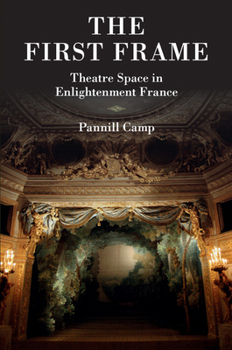
In the late eighteenth century, a movement to transform France's theatre architecture united the nation. Playwrights, philosophers, and powerful agents including King Louis XV rejected the modified structures that had housed the plays of Racine and Moli re, and debated which playhouse form should support the future of French stagecraft. In The First Frame, Pannill Camp argues that these reforms helped to lay down the theoretical and practical foundations of modern theatre space. Examining dramatic theory, architecture, and philosophy, Camp explores how architects, dramatists, and spectators began to see theatre and scientific experimentation as parallel enterprises. During this period of modernisation, physicists began to cite dramatic theory and adopt theatrical staging techniques, while playwrights sought to reveal observable truths of human nature. Camp goes on to show that these reforms had consequences for the way we understand both modern theatrical aesthetics and the production of scientific knowledge in the present day.
Format:Paperback
Language:English
ISBN:1107437407
ISBN13:9781107437401
Release Date:December 2017
Publisher:Cambridge University Press
Length:302 Pages
Weight:0.89 lbs.
Dimensions:0.6" x 6.0" x 9.0"
Customer Reviews
0 rating
Copyright © 2026 Thriftbooks.com Terms of Use
| Privacy Policy | Do Not
Sell/Share My Personal Information | Cookie Policy | Cookie Preferences | Accessibility Statement
ThriftBooks® and the ThriftBooks® logo are registered trademarks of Thrift Books Global, LLC
ThriftBooks® and the ThriftBooks® logo are registered trademarks of Thrift Books Global, LLC
