


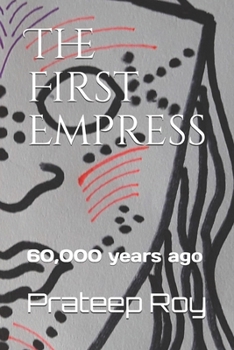
The First Empress: 60,000 years ago
No Customer Reviews

The First Empress is the story of the first women who led her group to migrate out of Africa around sixty thousand years ago into South Asia and then had spread across the world. Based on the recent Out of Africa migration theory of human evolution, the story is concocted around the Out of Africa migration theory and is a work of pure fiction. The story opens with the narrator who is a student of Genetics discussing about the Out of Africa migration with her parents who were keen to know about what their daughter is going to work for her doctoral thesis. After she describes the migration theory in detail to her parents, she gets so much engrossed into it that she starts dreaming about the episode of the migration. She imagines the chief of the group to be a woman who leads the migration with her people and hence the protagonist of her story is a woman and the First Empress of the world.The First Empress is a rebel of a 'band' located somewhere near Eritrea, north of Ethiopia in Africa. She takes over the band after killing the chief and plans to venture into the east, towards Red Sea and cross over to Yemen to enter Asia. The story unfolds with events of aggression, running over the other groups and about celebration of discovering new countries. The story is about her struggle to retain her crown, suppress rebels and killing them and the role of her loyalists who play important roles in her daring expedition. The story describes how she plans the expedition and how she wins over her dream of exploring the world.She named her group as the Goyas, the wild cats and starts spreading the Goya Kingdom throughout the coastal Yemen, Oman and Iran and finally enters the Indian soil at the Rann of Kutch, across the Mouth of Indus.
Format:Paperback
Language:English
ISBN:1674277601
ISBN13:9781674277608
Release Date:December 2019
Publisher:Independently Published
Length:50 Pages
Weight:0.19 lbs.
Dimensions:0.1" x 6.0" x 9.0"
Customer Reviews
0 rating
Copyright © 2026 Thriftbooks.com Terms of Use
| Privacy Policy | Do Not
Sell/Share My Personal Information | Cookie Policy | Cookie Preferences | Accessibility Statement
ThriftBooks® and the ThriftBooks® logo are registered trademarks of Thrift Books Global, LLC
ThriftBooks® and the ThriftBooks® logo are registered trademarks of Thrift Books Global, LLC
