


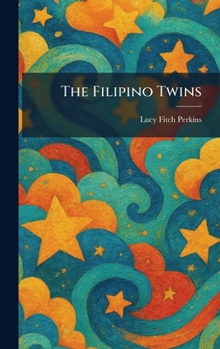
The Filipino Twins

"The Filipino Twins" is a charming work of children's fiction that transports readers to the shores of the Philippine islands to follow the daily adventures of Ramon and Rita. As part of Lucy Fitch Perkins' renowned series exploring the lives of children around the globe, this story offers a vivid glimpse into the cultural and agricultural traditions of a Filipino fishing village in the early 20th century.
The narrative centers on the twins as they participate in the rhythms of rural life, from assisting their father with fishing in the bay to helping their mother with household tasks and rice cultivation. Their peaceful routine is dramatically interrupted by a powerful typhoon, testing the family's strength and resourcefulness. Through this ordeal, the book highlights themes of resilience, community cooperation, and the deep bond of family.
Written with an emphasis on empathy and educational discovery, "The Filipino Twins" captures the unique spirit of the islands while celebrating universal childhood experiences. It remains a notable piece of historical juvenile literature, valued for its portrayal of Filipino heritage and its engaging story of survival and recovery in a lush, tropical setting.
This work has been selected by scholars as being culturally important, and is part of the knowledge base of civilization as we know it. This work was reproduced from the original artifact, and remains as true to the original work as possible. Therefore, you may see the original copyright references, library stamps (as most of these works have been housed in our most important libraries around the world), and other notations in the work.
This work is in the public domain in the United States of America, and possibly other nations. Within the United States, you may freely copy and distribute this work, as no entity (individual or corporate) has a copyright on the body of the work.
As a reproduction of a historical artifact, this work may contain missing or blurred pages, poor pictures, errant marks, etc. Scholars believe, and we concur, that this work is important enough to be preserved, reproduced, and made generally available to the public. We appreciate your support of the preservation process, and thank you for being an important part of keeping this knowledge alive and relevant.
Customer Reviews
ThriftBooks ® and the ThriftBooks ® logo are registered trademarks of Thrift Books Global, LLC
