


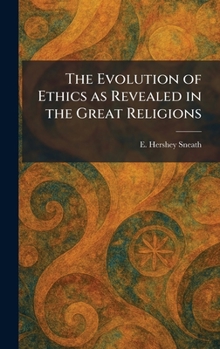
The Evolution of Ethics as Revealed in the Great Religions

"The Evolution of Ethics as Revealed in the Great Religions" is a comprehensive scholarly exploration into the historical development of moral thought across the world's most significant faith traditions. This work delves into the foundational ethical principles of systems such as Egyptian and Babylonian religions, Hinduism, Buddhism, Confucianism, Judaism, Christianity, and Islam. By tracing the chronological and spiritual trajectory of these belief systems, the text reveals how human understanding of right and wrong has been shaped by religious revelation and social evolution.
This volume serves as a vital resource for students of comparative religion, moral philosophy, and theology. Each section provides a rigorous analysis of how specific religions addressed the fundamental questions of human conduct and social obligation. "The Evolution of Ethics as Revealed in the Great Religions" underscores the universal quest for a higher moral order and offers profound insights into the common threads that unite disparate cultures. Its objective approach makes it an essential text for anyone seeking to understand the deep-rooted relationship between spiritual conviction and the development of ethical standards throughout human history.
This work has been selected by scholars as being culturally important, and is part of the knowledge base of civilization as we know it. This work was reproduced from the original artifact, and remains as true to the original work as possible. Therefore, you may see the original copyright references, library stamps (as most of these works have been housed in our most important libraries around the world), and other notations in the work.
This work is in the public domain in the United States of America, and possibly other nations. Within the United States, you may freely copy and distribute this work, as no entity (individual or corporate) has a copyright on the body of the work.
As a reproduction of a historical artifact, this work may contain missing or blurred pages, poor pictures, errant marks, etc. Scholars believe, and we concur, that this work is important enough to be preserved, reproduced, and made generally available to the public. We appreciate your support of the preservation process, and thank you for being an important part of keeping this knowledge alive and relevant.
Customer Reviews
ThriftBooks ® and the ThriftBooks ® logo are registered trademarks of Thrift Books Global, LLC
