


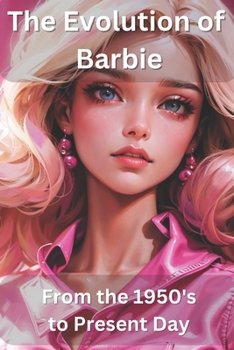
The Evolution of Barbie: From the 1950s to Present Day
No Customer Reviews

Ruth Handler, along with her husband Elliot, co-founded Mattel, a toy manufacturing company, in the 1940s. Ruth had a keen eye for market trends and a passion for understanding what children desired in their toys. It was during a family trip to Europe in the early 1950s that Ruth noticed a gap in the toy market. She observed her daughter, Barbara, playing with paper dolls and noticed how she enjoyed giving them adult roles. This inspired Ruth to create a three-dimensional doll that would challenge the existing norms of the toy industry.
In 1959, after years of research and development, Barbie was introduced to the world at the New York Toy Fair. The doll was named after Ruth's daughter, Barbara, and instantly became a sensation. Barbie was unlike any other doll on the market; she had a mature figure, fashionable clothes, and a wide range of career options. This was a stark departure from the traditional baby dolls that were popular at the time.
The creation of Barbie was not without its challenges. Many critics argued that the doll's adult-like figure was inappropriate for young girls. However, Ruth Handler firmly believed that Barbie represented a new era of toys that empowered girls to dream big and imagine themselves in various roles beyond motherhood.
Throughout the years, Barbie has continued to evolve, reflecting the changing times and societal expectations. From the introduction of diverse skin tones and body shapes to the inclusion of different career paths, Barbie has remained relevant and inspiring for generations.
In 1959, after years of research and development, Barbie was introduced to the world at the New York Toy Fair. The doll was named after Ruth's daughter, Barbara, and instantly became a sensation. Barbie was unlike any other doll on the market; she had a mature figure, fashionable clothes, and a wide range of career options. This was a stark departure from the traditional baby dolls that were popular at the time.
The creation of Barbie was not without its challenges. Many critics argued that the doll's adult-like figure was inappropriate for young girls. However, Ruth Handler firmly believed that Barbie represented a new era of toys that empowered girls to dream big and imagine themselves in various roles beyond motherhood.
Throughout the years, Barbie has continued to evolve, reflecting the changing times and societal expectations. From the introduction of diverse skin tones and body shapes to the inclusion of different career paths, Barbie has remained relevant and inspiring for generations.
Format:Paperback
Language:English
ISBN:B0CVFZW4G3
ISBN13:9798873897988
Release Date:February 2024
Publisher:Independently Published
Length:50 Pages
Weight:0.23 lbs.
Dimensions:0.1" x 6.0" x 9.0"
Related Subjects
HistoryCustomer Reviews
0 rating
Copyright © 2026 Thriftbooks.com Terms of Use
| Privacy Policy | Do Not
Sell/Share My Personal Information | Cookie Policy | Cookie Preferences | Accessibility Statement
ThriftBooks® and the ThriftBooks® logo are registered trademarks of Thrift Books Global, LLC
ThriftBooks® and the ThriftBooks® logo are registered trademarks of Thrift Books Global, LLC
