


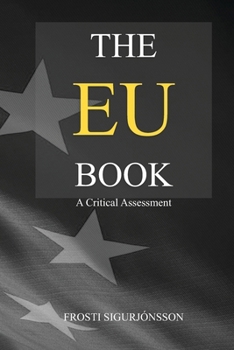
The EU Book: A Critical Assessment

The EU Book is written in light of the possibility that Icelanders may soon need to decide whether joining the European Union is a sensible choice.
It is not a book about the pros and cons of Iceland's membership in the EU. Instead, it provides a clear and comprehensive account of the Union's structure, its system of governance, and its development to the present day. Particular attention is given to the characteristics of the EU customs union, its policies on agriculture and fisheries, as well as its foreign policy and the euro area.
Major events such as the financial crisis, Brexit, the migration crisis, and the pandemic reveal both the strengths and weaknesses of the Union, and the book traces how the EU has responded to these challenges.
At the beginning of 2026, the European Union faced a range of significant challenges, which are examined in the book, including a growing democratic deficit, an ageing population, deteriorating public finances, unfunded pension obligations, the war in Ukraine, high energy prices, and economic slowdown. At the same time, Member States have shown decreasing willingness to follow EU policies and decisions.
The European Union now stands at a crossroads. Leaders in some Member States, along with senior EU officials, argue that deeper integration-transforming the EU into a federal state with stronger defence capabilities-is necessary to address these challenges and to strengthen its position in global competition.
This book is written for those who want to better understand how the European Union works and the challenges it faces today-an analytical overview and essential reading for anyone who wants to learn about the current state of the EU.
Customer Reviews
ThriftBooks ® and the ThriftBooks ® logo are registered trademarks of Thrift Books Global, LLC
