


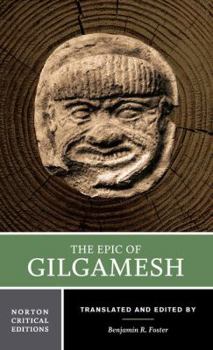
The Epic of Gilgamesh: A New Translation, Analogues, Criticism


Select Format
Select Condition 
Book Overview
More than a thousand years before Homer or the Bible, Mesopotamian poets sang of the hero-king Gilgamesh, who sought to crown his superhuman exploits by finding eternal life. This Norton Critical Edition presents translations by Benjamin R. Foster, Douglas Frayne, and Gary Beckman of the entire Gilgamesh narrative tradition, with some texts now in English for the first time. In addition to the eleven tablets of the great Akkadian epic, written around 1700 B.C.E., the book includes seven Sumerian poems about Gilgamesh, written before 2000 B.C.E., as well as the later Hittite version and other related sources, among them a Babylonian parody of the epic.
"Criticism" provides interpretive essays by William Moran, Thorkild Jacobsen, and Rivkah Harris and concludes with a modern poetic response to the Gilgamesh epic by Hillary Major.
A Glossary of Proper Names and a Selected Bibliography are also included.
"Criticism" provides interpretive essays by William Moran, Thorkild Jacobsen, and Rivkah Harris and concludes with a modern poetic response to the Gilgamesh epic by Hillary Major.
A Glossary of Proper Names and a Selected Bibliography are also included.
Format:Paperback
Language:English
ISBN:0393975169
ISBN13:9780393975161
Release Date:April 2001
Publisher:W. W. Norton & Company
Length:256 Pages
Weight:0.86 lbs.
Dimensions:0.5" x 5.1" x 8.3"
Customer Reviews
2 ratings
Book is in horrible condition. The front cover has been cut up and it looks to have water damage.
Published by DnA , 9 months ago
Haven't read the book yet
A work of art!
Published by Thriftbooks.com User , 20 years ago
Translating poetry is a tricky thing. Some people maintain that it can't be done. I would say that the translator can set himself three possible goals. First, he can try to create a "trot," a plain, "literal" translation where every word of the original is explained. See Nabokov's "Eugene Onegin" for an example of this. Second, he can try "simply" to translate it, to give his reader a good idea of what is there on the page, the mood, and so forth. LOTS of translators do this. Third, and most elusive, most difficult, is to create a work of literary art IN ENGLISH (or whatever the target language is). Hopefully this third goal will automatically include all the most important elements of "mere translation." But, if the translator succeeeds, he will have created an independent work of art which will then take on a life of its own. The most famous example of this would probably be FitzGerald's "Ruba'iyat of Omar Khayyam," probably better described as a fantasy and variations on themes of Omar Khayyam. Alexander Pope's translation of Homer's "Iliad" surely has legs, still in print after all these years. David Ferry has attempted the third goal in his translation of "Gilgamesh," and to my mind he succeeds. The result is a moving and beautiful work of literary art, and I predict a very long life for it.
The Epic of Gilgamesh Mentions in Our Blog

Enemies-to-Lovers
Published by Ashly Moore Sheldon • August 15, 2025
One of our favorite romance tropes has to be enemies-to-lovers. There's just something delicious about the fiery push and pull of a pair of would-be lovers treading the fine line between love and hate. Learn about the long history of enemies-to-lovers lit and explore some of our favorite subtropes. Plus a new TropeTote™!

Divine Inspiration
Published by William Shelton • March 14, 2023
From the earliest moments of mankind, even until today, our species has been compelled to look up and ponder our origin. This instinct naturally leant itself to the origin of books and writing itself, with much of the written word produced by mankind having been devoted to recording our beliefs.
Copyright © 2026 Thriftbooks.com
Terms of Use | Privacy Policy | Do Not Sell/Share My Personal Information | Cookie Policy | Cookie Preferences | Accessibility Statement
ThriftBooks ® and the ThriftBooks ® logo are registered trademarks of Thrift Books Global, LLC
ThriftBooks ® and the ThriftBooks ® logo are registered trademarks of Thrift Books Global, LLC
