


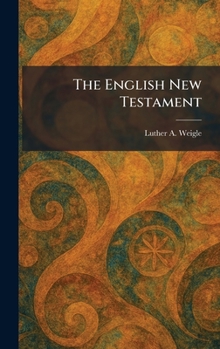
The English New Testament

The text examines the linguistic, theological, and historical challenges faced by translators across the centuries. It highlights the delicate balance between maintaining the poetic integrity of older versions and the necessity of incorporating contemporary linguistic discoveries and older manuscript evidence. By analyzing the prose and structural changes within the "New Testament", the author offers readers a profound understanding of how the English Bible became a cornerstone of both faith and literature.
Ideal for students of theology, church history, and linguistics, "The English New Testament" serves as an essential guide to the legacy of the English Bible. It underscores the enduring importance of making the sacred text accessible and intelligible to every generation, reflecting the scholarly dedication required to preserve the clarity and power of the scriptures.
This work has been selected by scholars as being culturally important, and is part of the knowledge base of civilization as we know it. This work was reproduced from the original artifact, and remains as true to the original work as possible. Therefore, you may see the original copyright references, library stamps (as most of these works have been housed in our most important libraries around the world), and other notations in the work.
This work is in the public domain in the United States of America, and possibly other nations. Within the United States, you may freely copy and distribute this work, as no entity (individual or corporate) has a copyright on the body of the work.
As a reproduction of a historical artifact, this work may contain missing or blurred pages, poor pictures, errant marks, etc. Scholars believe, and we concur, that this work is important enough to be preserved, reproduced, and made generally available to the public. We appreciate your support of the preservation process, and thank you for being an important part of keeping this knowledge alive and relevant.
Customer Reviews
ThriftBooks ® and the ThriftBooks ® logo are registered trademarks of Thrift Books Global, LLC
