


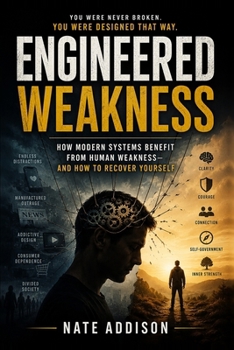
The Engineered Weakness: How Modern Systems Benefit From Human Weakness - and How to Recover Yourself

You are not imagining it. A great deal of modern life does better when you are a little weaker: more distracted, more anxious, more divided, more alone.
In 1984, a macrobiotic teacher and a Soviet defector, two men with no known connection who agreed on almost nothing, each described the same slide and pointed at the same fork in the road. The Engineered Weakness takes their warning seriously without taking either man on faith.
This is an investigation, not a conspiracy theory. You do not need a room full of plotters when many powerful institutions have each, separately, found that they gain when people are easier to steer. The book follows the paper trail (internal research, court records, industry memos, clinical trials) through the food on your plate, the feed on your phone, the thinning of the institutions that once stood outside the market, and the politics of fear.
Inside:
What a federal metabolic-ward trial found about why ultra-processed food gets overeatenWhat social-media companies' own research said about teenagers and division, set beside what they told the publicHow industries learned to manufacture doubt, from tobacco to fossil fuelsWhy loneliness became a market, and what the commercial substitutes can and cannot replaceWhy frightened, exhausted people start wishing for a strong handA practical method for becoming hard to addict, hard to frighten, hard to divide and hard to manageThroughout, the book marks what is established, what is only inferred, and what is merely suspected, so you can see exactly where the evidence ends and the argument begins.
For readers who are done with both establishment complacency and easy conspiracy, and who want teeth and honesty in the same book.
Customer Reviews
ThriftBooks ® and the ThriftBooks ® logo are registered trademarks of Thrift Books Global, LLC
